Iran’s Khamenei dismisses US nuclear proposal, vows to keep enriching uranium


 0
0


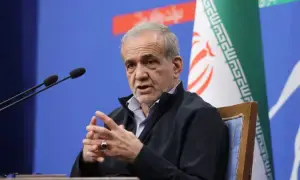
Iran’s Supreme Leader Ayatollah Ali Khamenei said on Wednesday that abandoning uranium enrichment was “100 per cent” against the country’s interests, rejecting a central US demand in talks to resolve a decades-long dispute over Tehran’s nuclear ambitions.
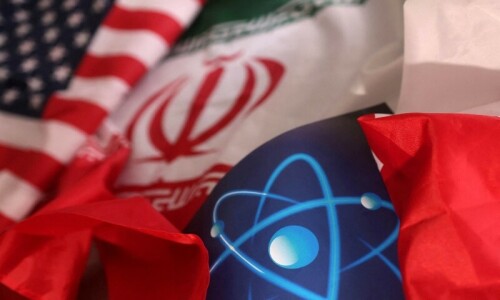
The US proposal for a new nuclear deal was presented to Iran on Saturday by Oman, which has mediated talks between Iranian Foreign Minister Abbas Araqchi and President Donald Trump’s Middle East envoy, Steve Witkoff.
After five rounds of talks, several hard-to-bridge issues remain, including Iran’s insistence on maintaining uranium enrichment on its soil and Tehran’s refusal to ship abroad its entire existing stockpile of highly enriched uranium — possible raw material for nuclear bombs.
Khamenei, who has the final say on all matters of state, said nothing about halting the talks, but said the US proposal “contradicts our nation’s belief in self-reliance and the principle of ‘We Can’”.
“Uranium enrichment is the key to our nuclear programme and the enemies have focused on the enrichment,” Khamenei said during a televised speech marking the anniversary of the death of the Islamic Republic’s founder, Ayatollah Ruhollah Khomeini.
“The proposal that the Americans have presented is 100pc against our interests … The rude and arrogant leaders of America repeatedly demand that we should not have a nuclear programme. Who are you to decide whether Iran should have enrichment?” he added.
“Independence means not waiting for the green light from America and the likes of America.”
Khamenei said, “If we have 100 nuclear power plants but don’t have enrichment, they will be of no use to us,” because “nuclear power plants need fuel” to operate. “If we cannot produce this fuel domestically, we have to reach out to the United States, which may have dozens of conditions.”
Tehran says it wants to master nuclear technology for peaceful purposes and has long denied accusations by Western powers that it is seeking to develop nuclear weapons.
‘Maximum pressure’
Reuters reported on Monday that Tehran was poised to reject the US proposal as a “non-starter” that failed to soften Washington’s stance on uranium enrichment or to address Tehran’s interests.
The New York Times reported on Tuesday that the US proposal includes “an arrangement that would allow Iran to continue enriching uranium at low levels” as the US and other countries “work out a more detailed plan intended to block Iran’s path to a nuclear weapon”.
It said the proposal would see the United States facilitating “the building of nuclear power plants for Iran and negotiate the construction of enrichment facilities managed by a consortium of regional countries”.
Iran has previously said it is open to temporary limits on its enrichment of uranium and is willing to consider the establishment of a regional nuclear fuel consortium. But it has stressed that such a consortium is “in no way intended to replace Iran’s own uranium enrichment programme”.
Trump has revived his “maximum pressure” campaign against Tehran since his return to the White House in January, which included tightening sanctions and threatening to bomb Iran if the negotiations yield no deal.
Trump wants to curtail Tehran’s potential to produce a nuclear weapon that could trigger a regional nuclear arms race and perhaps threaten Israel. Iran’s clerical establishment, for its part, wants to be rid of devastating sanctions.
During his first term, Trump ditched Tehran’s 2015 nuclear pact with six powers and reimposed sanctions that have crippled Iran’s economy. Iran responded by escalating enrichment far beyond the pact’s limits.
Iran’s clerical establishment is grappling with multiple crises — energy and water shortages, a plunging currency, losses among regional militia proxies in conflicts with Israel, and rising fears of an Israeli strike on its nuclear sites — all intensified by Trump’s hardline stance.
Iran’s arch-foe Israel, which sees Tehran’s nuclear programme as an existential threat, has repeatedly threatened to bomb the Islamic Republic’s nuclear facilities to prevent Tehran from acquiring nuclear weapons.
Tehran has vowed a harsh response.
‘Less than satisfactory’
In its latest quarterly report last week, the IAEA said Iran had further stepped up its production of highly enriched uranium.
In a separate report, it also criticised “less than satisfactory” cooperation from Tehran, particularly in explaining past cases of nuclear material found at undeclared sites.
Iran currently enriches uranium to 60pc, far above the 3.67pc limit set in the 2015 deal but still short of the 90pc threshold needed for a nuclear warhead.
The reports came ahead of a planned IAEA Board of Governors meeting in Vienna later this month which will review Iran’s nuclear activities.
Britain, France and Germany, the three European countries who were party to the 2015 deal, are currently weighing whether to trigger the sanctions “snapback” mechanism in the accord.
The mechanism would reinstate UN sanctions in response to Iranian non-compliance — an option that expires in October.
Iran has criticised the IAEA report as unbalanced, saying it relied on “forged documents” provided by Israel.