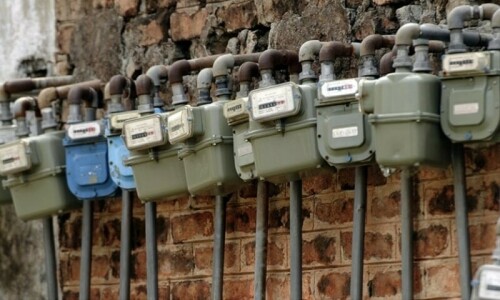
ISLAMABAD: The Sui Northern Gas Pipelines Ltd (SNGPL) has reported misuse of recently imposed grid levy on gas supply to industrial captive power plants (CPPs) under the instructions of the International Monetary Fund (IMF) to its disadvantage and has demanded an urgent intervention of the government to ensure a level playing field.
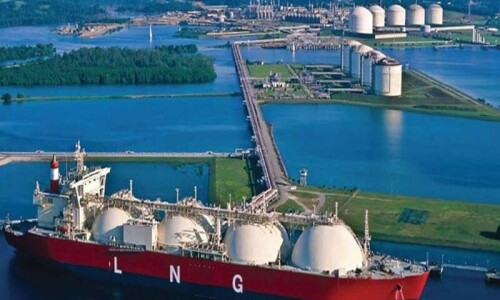
In a letter to the Ministry of Energy, the Lahore-based public sector entity has bemoaned the imposition of a Rs791 per million British thermal units (mmBtu) levy on natural gas and imported liquefied natural gas (LNG) to CPPs, which would gradually increase fourfold by next year.
It stated that the SNGPL was compelled to supply gas and RLNG to CPPs at a higher cost, as per the IMF’s instructions. However, the resultant unsold gas was being diverted to third-party suppliers, who provided it to SNGPL customers without applying the grid levy.
The sources in petroleum ministry stated that the SNGPL grievance stemmed from the ongoing non-enforcement of the levy by these private players, resulting in market distortions, erosion of fiscal parity, and direct financial harm to the state-owned utilities—SNGPL and SSGC.
Seeks an end to misuse by declaring third-party CCP suppliers as ‘agents’
The SNGPL noted that Section 3(2) of the Grid Levy Ordinance requires designated “agents” to bill, collect, and remit the levy on behalf of the federal government. The definition of “agent” in the ordinance includes SNGPL and SSGC, but the underlying intent is broad—capturing any entity engaging in the sale of gas to CPPs. It, however, argued that regulatory ambiguity had allowed private shippers to bypass levy imposition, undermining compliance parity.
The company claimed that “third-party shippers, such as Universal Gas Distribution Company (UGDC), are not imposing the levy on their CPP consumers, which is not in line with the provisions” of the ordinance. Moreover, private entities are already selling indigenous gas at cheaper rates without applying the levy, offering artificially deflated prices to CPPs in Punjab—an RLNG-designated zone while Sui companies were bound to purchase and sell gas at regulated prices, which has created market distortions and divert industrial demand away from Sui companies to third parties.
The situation is further aggravated by the non-imposition of the levy by private entities as CPPs were likely to opt for third-party shippers instead of shifting to the national power grid – the intended objective of the IMF directive for the imposition of grid levy on the supply of gas by sui companies to CPPs.
Arguing that failure to apply a uniform levy may violate structural benchmarks linked to fiscal discipline, energy sector sustainability, and gas pricing reform mandated under the ongoing IMF programme.
SNGPL demanded that the government issue a fresh circular confirming that third-party suppliers to CPPs are also considered “agents” under the Levy Ordinance and any policy decision regarding shifting CPPs away from gas to national power grid should be implemented across the board for both sui gas companies as well as the private third parties.
It also reported a list of eight CPPs who were getting natural gas without application of grid levy among a total of 18 consumers served by UGDC.
UGDC Chief Executive Ghiyas Abdullah Paracha strongly contested these claims and said actually not only the UGDC but also 15 other small private third-party suppliers were at the receiving end of unfair market competition.
He said the average gas price of sui gas companies amounted to about $3-3.5 per mmBtu while his company purchased gas from exploration companies at a premium on top of $5.8 per unit under the 2012 petroleum policy.
On top of that, a windfall levy was applicable on third parties of which 40pc went directly to the government and already increased UGDC’s price when compared to SOEs. Also, another levy could not be imposed on an existing levy.
Published in Dawn, May 29th, 2025