0
0

• Report says climate shocks may further aggravate already high malnutrition levels this year
• Malnutrition affected 2.1m children in 10 months
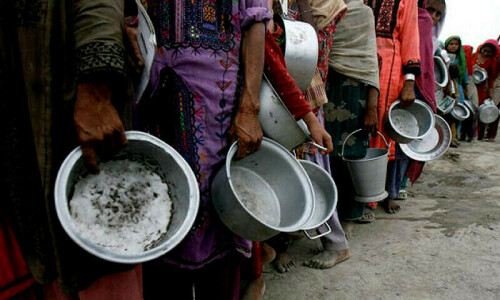
ISLAMABAD: High levels of acute food insecurity persisted in Pakistan between November 2024 and March 2025, with 11 million people facing crisis or worse, says the ‘2025 Global Report on Food Crises’.
The report published by the Food and Agriculture Organisation (FAO) of the United Nations on Friday, says these 11 million people or 22 per cent of the analysed population are projected to face acute food insecurity in 68 flood-affected rural districts across Balochistan, Sindh and Khyber Pakhtunkhwa.
This include 1.7m people in emergency. The population coverage increased by 38pc between the 2024 peak and 2025 current analysis, from 36.7m people to 50.8m people, with 25 additional districts, making the 2024 peak and the projection for 2025 not comparable.
The situation was better than the previous year’s lean season but weather extremes continued to affect livelihoods. The peak for 2024 in Pakistan remained the same as in 2023, with 11.8m people facing high levels of acute food insecurity between November 2023 and January 2024.
The report says Pakistan experienced persistently high levels of acute malnutrition between 2018 and early 2024 in analysed areas of Balochistan and Sindh, with global acute malnutrition (GAM) prevalence consistently above 10pc and reaching more than 30pc in certain districts. Insufficient funds also limited nutrition service coverage. In 2025, climate shocks and acute food insecurity risk further aggravated already high acute malnutrition levels.
According to the report, 11.8m people or 32pc of the analysed population were projected to face high levels of acute food insecurity in 43 rural districts of Balochistan, KP and Sindh during the winter lean season. Of them, 2.2m were in emergency under the Integrated Food Insecurity Phase Classification (IPC) during November 2023 to January 2024.
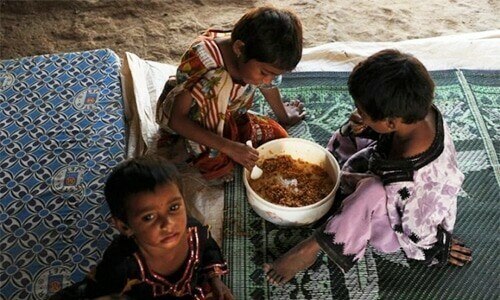
The report further said acute malnutrition burden during March 2023 and January 2024 affected 2.1m children aged 6 to 59 months. Children’s diets were of insufficient quality and quantity, exacerbated by acute food insecurity which worsened during the winter months (December–February) when food prices are higher, livelihood opportunities are restricted and access to markets is reduced.
A high prevalence of acute malnutrition among pregnant and breastfeeding women was accompanied by a high proportion of children being born with a low birth weight, particularly in Sindh and KP. Levels of diarrhoea, acute respiratory infections and malaria were high, worsening during the winter months. Inadequate coverage of sanitation facilities and safe drinking water was a significant concern, partly following the heavy monsoon floods in 2022.
These floods damaged most water systems in Sindh and, to a lesser extent, in Khyber Pakhtunkhwa and Balochistan. Across all three provinces, poor healthcare-seeking behaviours and blocked roads limited access to healthcare. Insufficient funds also limited nutrition service coverage. In 2025, climate shocks and acute food insecurity risk further aggravated already high acute malnutrition, report says.
History of food crisis
A lower-middle-income country, Pakistan is susceptible to weather extremes, including floods and drought, especially in the provinces of Balochistan, Khyber-Pakhtunkhwa and Sindh.
The geographical coverage of IPC analyses has varied but focused primarily on Sindh in 2017-2018, and Balochistan and Sindh in 2019 and 2021. Major floods affected all three provinces in 2022, with the highest share of people facing high levels of acute food insecurity reaching 49pc in 16 districts of Balochistan and Sindh.
Published in Dawn, May 18th, 2025