PM directs comprehensive regulatory framework for agriculture sector


Prime Minister Shehbaz Sharif on Thursday said the agriculture sector was being developed on modern lines to achieve self-reliance and directed the development of a comprehensive regulatory framework for the sector.
During the second quarter of FY25, the agriculture sector experienced a significantly declined growth rate of 1.10pc compared to 5.80pc the previous year. The prime minister has previously stated his government’s determination to transform the sector on modern lines to achieve self-sufficiency, emphasising its vast potential for rapid economic development.
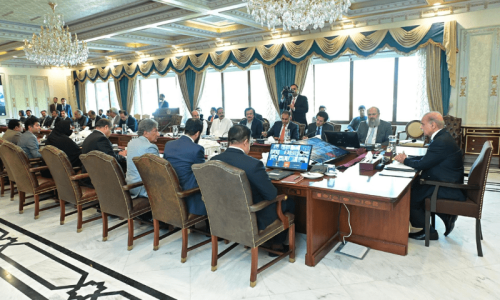
Chairing a meeting on agricultural sector reforms today, the prime minister stressed that government’s priority for the promotion of modern technology in the agricultural sector. He also directed the relevant department to present a National Agri-Innovation Plan for the agricultural sector.
The prime minister instructed the formulation of a coordinated strategy to develop the agriculture sector in consultation with provinces and relevant stakeholders. He instructed authorities concerned to formulate a sustainable and long-term policy for agro-industrial development to promote agriculture and forestry and help counter the effects of climate change.
PM Shehbaz directed the provision of agricultural loans to farmers on easy terms and stressed a focus on agricultural research to enhance production. He also called for accelerating ongoing reforms in the certification system for agricultural seed and developing an effective action plan to promote high-quality seeds.
Agriculture sector decline
The deceleration in the agriculture sector can be attributed mainly to negative growth in key crops such as cotton, rice, and maize. Cotton ginning and miscellaneous components showed growth in FY24 due to excellent cotton output but declined in FY25 due to poor cotton production.
Cotton production saw a substantial decline of 30.7pc, with this year’s output recorded at 7.084 million bales, compared to 10.22m bales the previous year. Rice production dropped by 1.4pc, totalling 9.72m tonnes, down from 9.86m tonnes the previous year. Similarly, maize production decreased by 15.4pc, with output falling to 8.24m tonnes from 9.74m tonnes the previous year.
The latest revised estimates indicate a 2.3pc decrease in sugarcane production, totalling 85.62m tonnes, down from 87.64m tonnes last year. The wheat area dropped by 6.8pc from last year, despite having no impact in Q1. Potatoes saw a 14.2pc increase, while other crops grew by 0.73pc.
During a high-level consultative meeting on the agriculture sector in April, the prime minister reaffirmed his government’s commitment to revitalising the country’s agriculture sector by promoting innovation, sustainable development, and the active involvement of young experts and key stakeholders to revive the agricultural economy.
PM Shehbaz called for tapping into the talent of young professionals and researchers while leveraging the wisdom of experienced experts to guide the process. He expressed concern that cotton production had fallen so low that Pakistan had become an importer while neighbouring countries like India and China had progressed in crop yield.
Referring to Pakistan’s 65 per cent rural population, the prime minister stressed the need to provide meaningful opportunities to rural youth, particularly in agri-tech and entrepreneurship. He noted the absence of patronage for local agri-machinery manufacturers and service companies supporting small farmers, urging that these be brought into a systematic framework.
He directed the formation of working committees on five critical sectors. The meeting highlighted the need to increase domestic and foreign investment in the agriculture sector, while also strengthening the role of financial institutions and facilitating agricultural loans.