0
0

Bangladesh’s interim government has banned all activities of the Awami League, the political party of deposed former prime minister Sheikh Hasina, under the country’s Anti-Terrorism Act, citing national security concerns.
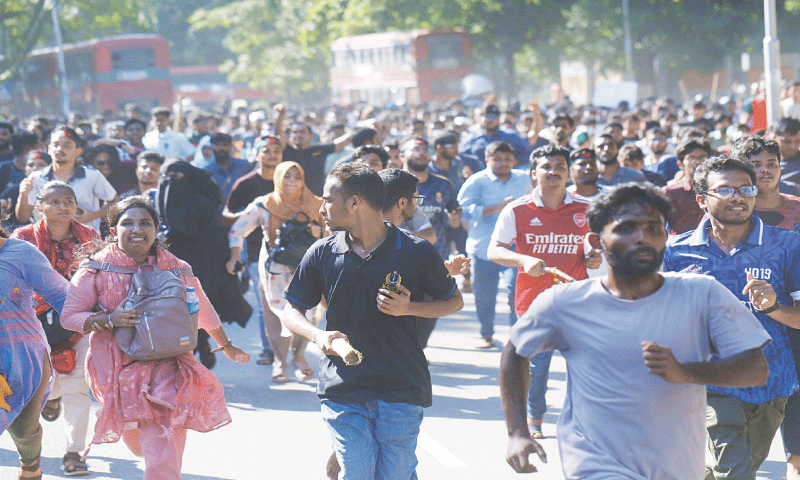
The decision, announced late Saturday, follows days of street protests led by the student-driven National Citizen Party, which emerged from last year’s uprising that toppled Hasina.
Several Islamist and right-wing parties, including Jamaat-e-Islami and other opposition groups, joined the demonstrations, demanding that the Awami League be designated a terrorist organisation.
The ban would remain in place until the trial of the party and its leadership over the deaths of hundreds of protesters at the International Crimes Tribunal is completed, the government said in a statement.
The government also announced an amendment to the ICT Act, allowing the tribunal to prosecute not only individuals but also political parties and organisations. The change clears the way for the Awami League to be tried as a collective entity for alleged crimes committed during its time in power.
The Awami League, which was founded in 1949, dismissed the decision as illegitimate, posting on its official Facebook page: “All decisions of the illegal government are illegal.”
The country has seen rising tensions and protests in recent months, after deadly protests forced Hasina to flee to India in August and an interim government led by Nobel Peace laureate Muhammad Yunus took charge.
Yunus pledged reforms and said the poll could be delayed until 2026.
The unrest began in July with student protests against public sector job quotas, but quickly morphed into one of the deadliest periods of political violence since Bangladesh’s independence in 1971.
In October, the government banned the Awami League’s student wing, Bangladesh Chhatra League, labelling it a “terrorist organisation” for its role in violent attacks on protesters.