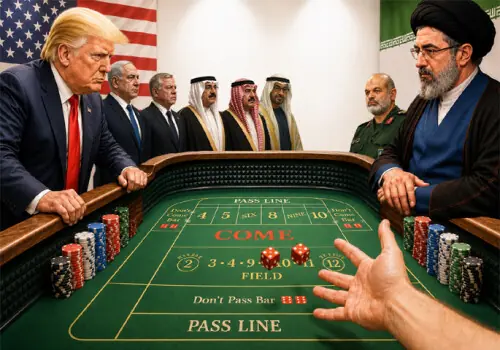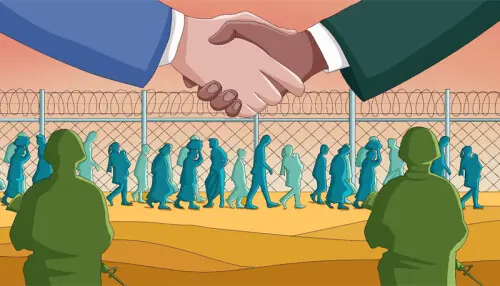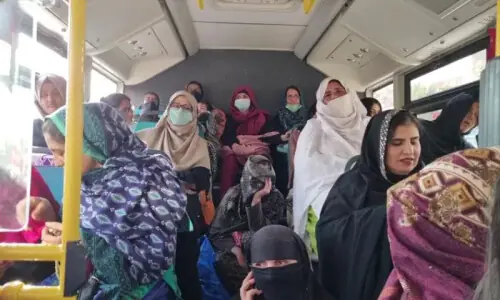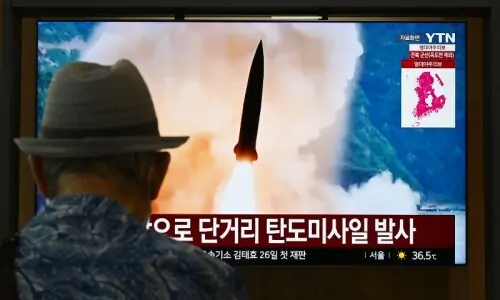
Instagram in Pakistan exploded with hilarious memes about the impending attack by India after the deadly attack in Pahalgam in India-occupied Jammu and Kashmir. While Indian media was hurling aggressive threats and invectives, they were met with memes of young Pakistani girls discussing what clothes to wear when India attacked, or if they would have to delay their marriage plans.
In other memes, people ran for cover in the dark under an attack of paper planes, Mr. Bean waited in a field with increasing boredom as the expected attack did not materialise, students wondered if they should study for the upcoming exams hoping they would be postponed. Some brushed up on Indian pronunciation of Urdu words, others shared maps showing plans for DHA Goa. Two young men, an Indian and a Pakistani, tried to cook a meal together in their shared flat, navigating the different names for onions and potatoes, while others anticipated a visit to their neighbourhoods by actors Salman Khan and Katrina Kaif.
Humour becomes the last line of defence for Pakistanis in the face of increasingly farcical politics and dysfunctional institutions. The gentle humour of Shafiqur Rahman and Mushtaq Ahmad Yusufi gradually transformed into subversive comedy. The Umar Sharif Show, Fifty-Fifty, Such Gup, Imran Aslam’s satires for Grips Theatre, Hum Sab Umeed Se Hain, Loose Talk and Anwar Maqsood‘s witticisms developed a taste for an existential theatre of the absurd. ‘Na maloom afraad’ [Unidentified People], a term used in news reports for perpetrators of violence in the city, soon acquired a comic status.
In contrast to the Indian media’s war cries, Pakistanis are using social media to satirise conflict, ridicule aggression and reclaim the narrative, one meme at a time
Gallows humour has been an integral part of wars and conflict. Captain Fred Roberts produced a humorous newspaper called The Wipers Times from the World War I front line of the trenches, using an abandoned printing press in France. Post-war comedy shows and films such as Blackadder Goes Forth, Dad’s Army, MASH and Good Morning Vietnam replaced the collective memory of horrific wars with a benign narrative.
Disney made propaganda cartoons during World War II, as did Punch Magazine. Even The Comrade weekly, which had a serious mission during the freedom movement to critique British rule in India, carried satirical columns by the humourist Wilayat Ali Bambooq. Comedian Judy Carter says, “Turning a problem into a punch line turns you into a winner instead of a victim.”
The current spate of memes generated in Pakistan takes wartime humour to another level. These are unscripted spontaneous narratives put together not by professional writers or propagandists but ordinary citizens across villages and cities. Belligerent Indian anchors were left nonplussed by this levity, making Indian war chants sound like overly dramatic posturing.
The Pakistani memes are not a new generation’s version of the 1965 idealistic war songs of Noor Jehan. Neither are they a call for peace. Most memes offer a comic lalkar or challenge, while ridiculing the adventurism implied by the threat of war by India. In essence, they say ‘Come on, man, I don’t want to fight you. I love your movies, but if you must, bring it on.’
This generation has witnessed many failed wars with a heavy price paid by civilians. Memes create a platform of resistance to the insidious powerplay of a generation that no longer speaks for them. Fiction writer Maggie Slater says sharing outlandish memes helps us manage “the crushing collective existential crisis, knowing that we’re not moving through this big scary world all alone.”
By making light of the idea of war, meme culture can indirectly promote peace. Young people challenge war rhetoric by pointing out its absurdities, and that an India-Pakistan war is passé, making it harder to take jingoistic posturing seriously. The latest ban by India on social media accounts of Pakistani actors is circumvented with VPN apps.
Today, almost 2 billion memes are shared every day, outnumbering the total global strength of armed forces personnel, estimated to be 27 million. An Instagramer shares: “Bombs that cost $100,000, dropping from a plane that costs $100,000,000, flying at a cost of $40,000 per hour, to kill people living with less than $10 a day.” European countries have set aside their centuries-old differences to prosper together, while African leaders are talking of a united Africa. Will South Asia choose peace?
Can this war be laughed away? If it were left to the people of India and Pakistan, there would be no war. The memes generation is trying to take back the authorship of their future. They represent the doves standing up to the hawks.
Published in Dawn, EOS, May 11th, 2025