0
0

MUZAFFARABAD: Authorities in Kotli district of Azad Jammu and Kashmir (AJK) have embarked on a dedicated initiative to restore and preserve two prominent heritage sites — Throchi Fort and Kotli Temple — with the aim to transform them into attractive destinations for tourists and heritage enthusiasts.
A meeting chaired by Kotli Deputy Commissioner Nasir Rafique reviewed various facets of the proposed restoration, including structural design, aesthetic improvements and the tourism potential of both sites.
The session featured a detailed multimedia presentation that shed light on the historical significance and the planned developmental interventions for both locations.
Speaking to Dawn on Tuesday, Mr Rafique said he had directed the preparation of a comprehensive project proposal to be vetted at the district level before being forwarded to the chief secretary’s office in Muzaffarabad for approval and funding allocation.
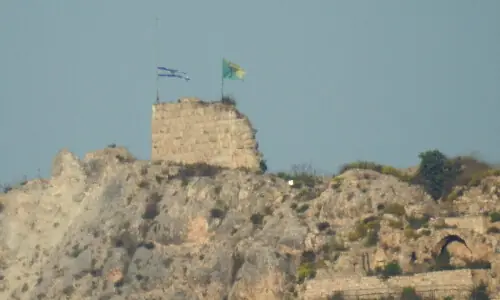
According to research conducted under the aegis of the Taxila Institute of Asian Civilisations, Throchi Fort — strategically perched atop a rocky hill on the left bank of the Poonch River near Gulpur village — was originally built by the Mangral Muslims, a Rajput clan, under the leadership of Nasir-Din Khan.
Unfortunately, the exact date of its construction, however, remains undocumented. The fort changed hands in 1855 when it was taken over by Maharaja Gulab Singh, who rebuilt it in stone during the 19th century. Prior to that, mud bricks had been used in its construction.
Once a symbol of might and majesty, the fort now lies in a state of decay. Its architectural grandeur has largely eroded, with the roofs and upper stories of its watchtowers having completely collapsed. Only remnants of wooden planks and beams offer a glimpse into its original form, leaving behind roofless and fragmented structures.
Equally in need of attention is the pre-partition era Kotli Temple, built on the left bank of the River Poonch in what now is called Bulyah Mohallah.
The temple is also in a deplorable condition, owing to decades of official neglect and unchecked encroachments. Videos of the site reveal crumbling walls, a partially collapsed roof, and illegal structures encroaching upon its premises — all indicators of prolonged abandonment.
“Throchi Fort and Kotli Temple are not just relics of the past — they are invaluable links to our cultural identity,” Mr Rafique said.
The deputy commissioner said that as part of the restoration initiative, he had tasked the assistant commissioner of Charhoi with identifying 25pc of the land surrounding Throchi Fort to facilitate the development of public amenities, parking space and a suitable access route for visitors.
Additionally, plans include the establishment of tuck shops within the fort’s premises to provide basic refreshments and services for tourists.
Mr Rafique said the administration had decided to construct a smooth and safe access road to both heritage sites in collaboration with the Public Works Department.
Published in Dawn, April 16th, 2025