0
0

ISLAMABAD: The Council of Islamic Ideology (CII) has ruled that the Supreme Court’s decision related to polygamy is not valid as per the norms of Sharia.
“It is un-Islamic to grant the first wife the right to annul the marriage as a result of solemnising second marriage [by her husband] without her permission,” said the CII ruling.
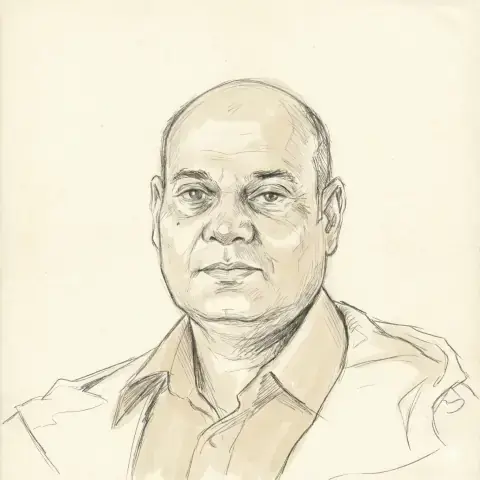
The Council reached the decision at its 241st meeting presided over by CII Chairman Dr Raghib Hussain Naeemi on March 25-26.
The CII discussed the Oct 23, 2024 Supreme Court’s decision, concerning a marriage dispute and the violation of Muslim Family Laws Ordinance 1961.
The Working Paper presented before the CII read that the case in the Supreme Court involved a husband who had entered into a second marriage without obtaining permission from his previous wife, which was a violation of 1961 Muslim Family Law. The first wife sought dissolution of the marriage (faskh-i-nikah) based on this violation.
The Working Paper noted that the apex court had upheld the wife’s plea based on her husband’s violation of the 1961 Ordinance regarding polygamy. The SC had stated that the violation itself is grounds for dissolving the marriage.
However, the CII observed that in ordinary circumstances there are only two options for dissolution of marriage for Muslims — khula and talaq.
The apex court, however, had emphasised in its verdict the importance of adhering to legal procedures in marriage, particularly those concerning polygamy. It had noted that the 1961 Law protects the wife’s right to seek dissolution of marriage in case of such violations while ensuring that her other rights are also safeguarded.
The CII members also recalled some earlier decisions of the Council that males do not need the permission of the existing wife or wives for subsequent marriages as per the principles of Sharia. It also noted that the 1961 Law was contrary to Sharia and the males can enter into four marriages at one time, without being answerable to previous wives or any person.
The members who attended the meeting included Zafar Iqbal, Abdul Ghafoor Rashid, Sahibzada Pir Khalid Sultan, Muhammad Jalaluddin, Farida Rahim, retired Justice Altaf Ibrahim, Uzair Mahmood , Pir Shamsur Rehman, Allama Yousuf Awan, Mufti Muhammad Zubair, Syed Iftikhar Hussain Naqvi, Mufti Intikhab Ahmed, Hassan Haseebur Rehman, Shafiq Pasruri, Sahibzada Hafiz Muhammad Amjad, Saeedul Hasan and Atiqur Rehman.
Meanwhile, the CII meeting supported medical tests for thalassemia or other infectious diseases before marriage. The Council added that it can be an optional part of Nikahnama.
The members gave the ruling that the parties concerned cannot be forced to conduct tests while solemnising Nikah.
The ruling came in response to the query by various government departments to make such tests mandatory in Nikahnama as it was in some Muslim countries.
The CII meeting also observed that organs such as kidney, liver etc can be transplanted into the body of another person, but without endangering the life of the organ donor.
Published in Dawn, March 27th, 2025