IT is clear that in the midst of a fresh wave of terrorism, particularly after the Jaffar Express hijacking, the state cannot respond to the crisis using conventional approaches.
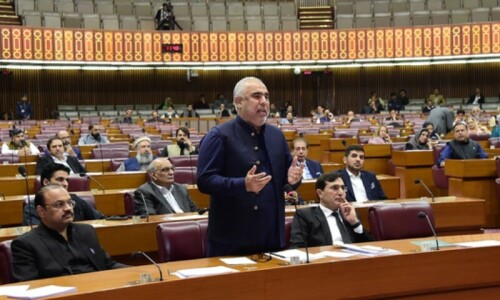
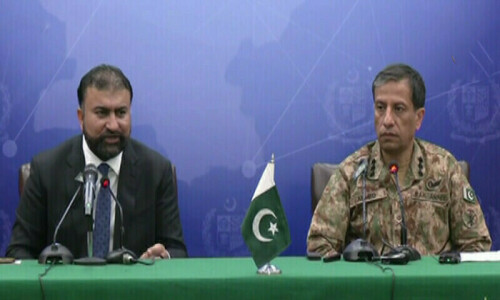
Both the Baloch separatist insurgency and the TTP campaign of terror are posing existential threats to the nation, and if not handled with alacrity and foresight these violent anti-state movements can do much damage to the country’s integrity. While discussing the details of the Jaffar Express episode last week, the DG ISPR mentioned that if the 14 points of the revised National Action Plan were focused on, “terrorism can be eradicated”. The federal minister of state for interior made similar remarks in the National Assembly.
While the original NAP was formulated in 2014 after the APS Peshawar atrocity, the plan was revised in 2021, highlighting kinetic and non-kinetic domains of the counterterrorism blueprint. Where the Baloch insurgency and the TTP campaign are concerned, the kinetic aspects of NAP are essential, as a state of insecurity is untenable, and all armed groups that threaten peace must be neutralised.
Yet successive governments, including the current set-up, have not done enough to implement NAP’s non-kinetic measures. These include supporting the reconciliation process in Balochistan, as well as overseeing reforms in KP’s merged areas, which are hardest hit by the TTP insurgency. Unless action in the field is complemented with social, economic and political efforts in the militancy-hit parts of Balochistan and KP, led by the civilian administration, this bloody cycle of violence will continue.
While addressing the briefing along with the DG ISPR, the Balochistan chief minister, referring to the Jaffar Express ambush, said it was an act of terrorism, while dismissing the economic and political grievances behind the violent action. He is only partially right. There is no doubt that the train hijacking was a terrorist act, as innocent people were targeted. The state must therefore go after all those involved in this crime. But the fact is that Balochistan’s socioeconomic misery is undeniable. Parts of the province live in mediaeval poverty, especially compared to urban centres in other parts of the country. This is despite the fact that the province sits on a treasure of mineral wealth. It is this deprivation, and the lack of political freedom for genuine Baloch leaders, that the terrorists exploit.
Therefore, the non-kinetic aspects of NAP cannot be ignored in order to establish a lasting peace. The reconciliation process, involving those ready to give up their arms should be given a renewed push by political elements from across Pakistan. Certain red lines are in order — for instance, there can be no compromise on Pakistan’s territorial solidarity and the supremacy of the Constitution. Within these parameters, an organic political process can bring Balochistan back from the abyss.
Published in Dawn, March 17th, 2025