Birthright citizenship



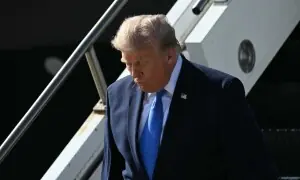
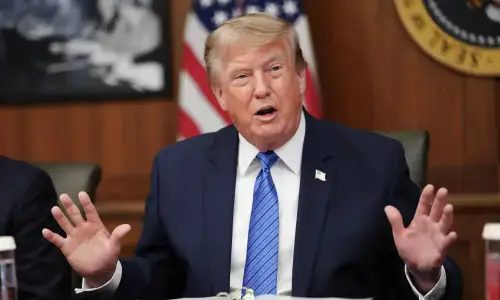
IN a bold and provocative move on the first day of his second term, President Donald Trump declared his intent to end birthright citizenship through an executive order. This action, however, stands in stark contradiction to the plain text of the 14th Amendment and more than a century of supreme court jurisprudence. As expected, it was met with immediate legal challenges, and the prospect of it surviving judicial scrutiny despite a supreme court reshaped by Trump’s appointees remains slim.
Before delving into the constitutional merits, it is imperative to reflect on the audacity of this attempt. Every president swears an oath to “preserve, protect, and defend the Constitution”. Moments after taking that oath, President Trump violated it, challenging the very document he had sworn to uphold.
To comprehend the implications of this executive action, one must turn to the history and language of the 14th Amendment. Before its ratification, the US operated under a racially stratified system where enslaved people were denied basic rights. The infamous Dred Scott decision ruled that enslaved people and their descendants could never be citizens. The Civil War abolished this regime, and the 14th Amendment declared: “All persons born or naturalised in the United States, and subject to the jurisdiction thereof, are citizens of the United States and of the State wherein they reside.”
The language is unequivocal: if you are born on American soil, you are an American citizen, regardless of the status of your parents. The amendment envisions an inclusive understanding of citizenship that transcends racial, national, or social distinctions.
The language of the 14th Amendment is clear.
The US supreme court reaffirmed this in the 1898 case ‘United States vs Wong Kim Ark’, ruling that Wong, born in San Francisco to Chinese immigrant parents, was an American citizen. This principle was upheld in subsequent decisions, including ‘Plyler vs Doe’, which solidified that children of undocumented immigrants are entitled to the protections of the 14th Amendment. Trump’s executive order argues that children born to undocumented immigrants should not be granted citizenship because they are not ‘subject to the jurisdiction’ of the United States. This assertion is nonsensical. Undocumented immigrants, like all others within US borders, are subject to the country’s laws. The only individuals exempt from US jurisdiction are foreign diplomats.
One might wonder, however, whether the current supreme court, now dominated by conservative justices, might uphold Trump’s executive order, given the president’s vocal and sustained campaign against birthright citizenship. The court, it is true, has contorted American jurisprudence in recent years to avoid direct confrontation with Trump’s policies, but upholding birthright citizenship would not require an act of judicial innovation. Take, for example, the Fuller Court in ‘Plessy vs Ferguson’, ruling that enshrined racial segregation in America. Even these justices, who upheld the pernicious doctrine of “separate but equal” could not find a way to circumvent the clear language of the 14th Amendment in ‘Wong Kim Ark’. If even the racially complicit justices of that era could not ignore the plain meaning of the 14th Amendment, it is unlikely that today’s court will find a plausible path to undermine birthright citizenship.
The ratification of the 14th Amendment was a rejection of the notion that some people, by virtue of their birth, could be denied full rights of citizenship. Trump’s challenge to this principle represents a return to divisive rhetoric that sought to limit the scope of citizenship. His order seeks to undermine a foundational guarantee of equality before the law, reinstating an insidious idea of exclusion that the 14th Amendment sought to abolish.
In the face of Trump’s order, the defence of the 14th Amendment is not simply a matter of legal technicalities. It is a matter of upholding the very ideals upon which the US was founded. The constitution is not a document to be disregarded by the whims of political expediency, no matter who sits in the Oval Office.
Protecting it requires vigilance, courage, and a steadfast commitment to the ideals of equality and justice that it enshrines. Regardless of the political climate, regardless of the executive orders that may emerge from any administration, the US Constitution must be defended not as a historical relic, but as a living document that continues to safeguard the rights and liberties of the American people, born on American soil or otherwise.
The writer is a final year LLB (Hons) candidate at the University of London (Pakistan College of Law).
Published in Dawn, February 13th, 2025