Holding the rope of his animal, Khuda Bakhsh, 60, looked optimistic. He is surrounded by scores of camels brought to the annual fair held recently at the shrine of Pir Fazal Din Chishti in Kalyam Sharif, a village of tehsil Gujjar Khan in Rawalpindi.
It took Khuda Bakhsh four days to reach the shrine on foot from his native town, Injra, in Attock. Mr Bakhsh and his group members brought fifteen camels. “We have sold eleven camels while the four are still to be sold,” he said. The camel owners bring peanut husks along with them to feed their animals.
Like Khuda Bakhsh, hundreds of camel owners bring their animals to the Kalyam fair, which—besides other festivities—hosts probably the largest camel market in Pakistan. The unwavering devotion of camel owners to Pir Fazal Din Chishti, who passed away 132 years ago, is another reason they would gather in this town every year. In return, the villagers of Kalyam abandon their homes for camel owners and devote themselves to serving the pilgrims.

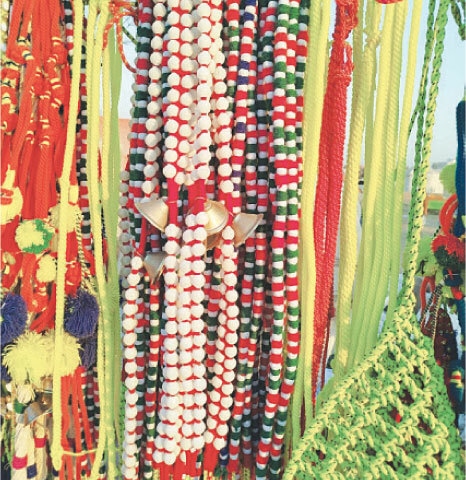
The fair lasts 10 days, from December 31 to January 9, and is considered the largest rural fair in Potohar. Stalls of food items are installed along the routes leading to the shrine. The vendors sell toys for children, clothes and shoes, and ornaments for camels and set up temporary shops near the shrine. Noted Qawals, local poets singing ‘baints’ (poetry), drum beaters, and shehnai maestros add life to this festive occasion.

However, camels remain the most prominent feature. Interestingly, there is no place to cater to this huge camel market in the village, and the animals are kept in wheat fields which are in their early stages of growth. The shoots are destroyed after a week of camels trampling on them, but locals claim by March, this wheat crop looks more promising than other wheat crops in the area.

Camel traders told Dawn these animals were considered an integral part of rural life. “Camels were kept in every village as people needed them most for transportation,” recalled Ghulam Haider, a resident of a Chakwal village. In his late 80s, he spent most of his life with camels. “I used to work at a brick kiln in Dhakku village and transport bricks to different villages on my camels,” he said, adding that camels had become irrelevant in the present times due to other modes of transportation.

However, those who have been rearing camels for years are still willing to stick to the trade, some for money and others out of love. “Camels might have lost their use, but not their importance. They have become more prized mammals as their prices have skyrocketed,” said Muhammad Tanveer, who brought his camel tagged as ‘Qaidi No. 804’—a’ reference to incarcerated PTI leader Imran Khan. “My relative Azhar sold his camel at the price of Rs5 million a day ago,” Tanvir, who hailed from Chakwal district, told Dawn. A camel owner from Nakka Toot village in Pindigheb tehsil of Attock was demanding Rs10 million for his camel.
Published in Dawn, February 3rd, 2025