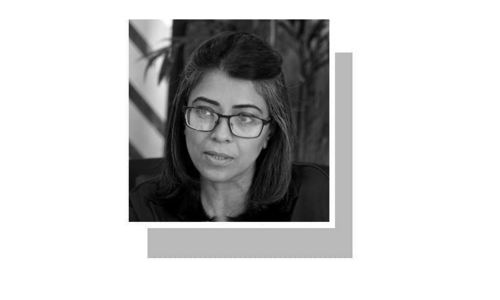
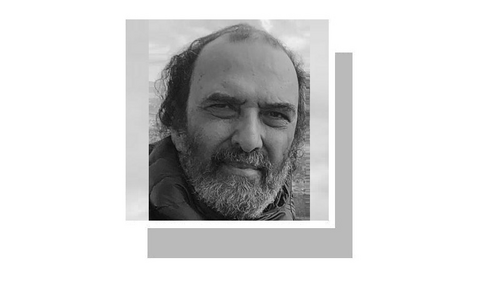
NEW DELHI: Whenever peace returns to India and Pakistan so they can live as normal friendly neighbours, the unremitting toil of a platoon of public intellectuals and peace activists from both sides would be remembered as a vital element. Documentary filmmaker and writer Tapan Bose who died at 78 on Thursday was the glue in the endeavour. He had brought together the best and the most devoted activists to the Pakistan-India People’s Forum for Peace and Democracy.
Bose’s kindred spirits of peace, quite a few of whom having passed away, included Admiral Laxminarayan Ramdas, Kuldip Nayyar, Dr Mubashir Hassan, B. M. Kutty, I. A. Rehman, Praful Bidwai, Asma Jahangir, Karamat Ali, Dinesh Mohan, Gautam Navlakha, and Achin Vanaik. Among the early practitioners was the late Nirmala Deshpande.
Bose tweaked his filmmaking to complement his life as a committed human rights campaigner. His activism took root during India’s Emergency in the 1970s. Apart from the Pakistan-India Peoples’ Forum for Peace and Democracy, he was a founding member of the South Asia Forum for Human Rights.
Born in 1946, Bose began his career as a journalist before transitioning to filmmaking under the mentorship of S Sukhdev. Since 1971, he had created powerful documentaries highlighting human rights violations, state violence, and social injustices. His seminal works include An Indian Story (1981), which exposed the blinding of undertrial prisoners in Bhagalpur. It faced censorship before being cleared by the Bombay High Court. Beyond Genocide: Bhopal Gas Tragedy (1986) was co-directed with Suhasini Mulay and Salim Shaikh. It also faced challenges from the censors before gaining clearance through legal intervention.
Stirring documentaries
Bose’s documentaries, including Behind the Barricades — Punjab (1993), Jharkhand — The Struggle of the Indian Indigenous People (2003), and The Vulnerable Road User (1999), were showcased at international film festivals.
Behind the Barricades: Punjab focused on the story of the Sikh people’s struggle for recognition of their identity, religion, culture and their right to political, economic and social autonomy. It was banned as the government felt that it overtly supported the separatist militants. The film-makers fought for 12 years to get the film released. An appellate tribunal had imposed a requirement that “in all interviews, so as to ensure the genuineness of the interviews and interviewees, except where the interviewee is a known public character, there shall, throughout the interview, be a subtitle… depicting the name and address of the interviewee and the location where the interview was taken. In default, such interview to be deleted in its entirety”. The High Court of Delhi finally removed the ban with a few minor cuts, which were accepted by the film-makers.
Bose and his activist colleagues had stressed the governments of India and Pakistan resume talks with consistency, patience and open minds; prevent nuclear escalation, desist from new nuclear and missile tests and halt military growth by reducing military expenditure by a minimum of 25 percent. They should make the visa procedures easy and citizen-friendly, increase diplomatic staff to pre-2001 levels and open consulates in Mumbai and Karachi. Both should lift the ban on each other’s publications; review and revise school curricula to remove propaganda; stop treating held Kashmir as a territorial dispute and view it as a matter that affects the lives of Kashmiri people; and address socio-economic issues, gender injustice and intolerance towards minorities.
Published in Dawn, January 31st, 2025