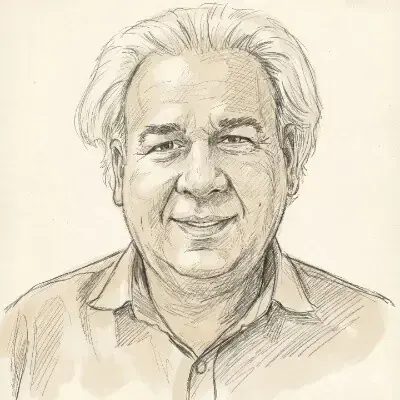
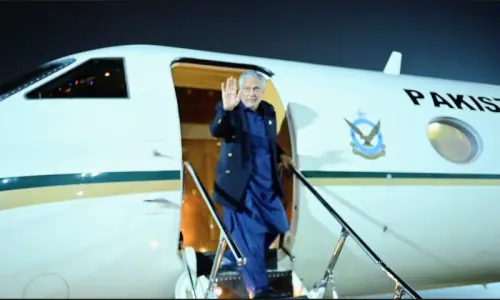
KARACHI: National Command Authority (NCA) Adviser retired Lieutenant General Khalid Ahmed Kidwai has stressed the need for preserving and strengthening the country’s nuclear capability.
Speaking at a seminar here on Saturday, he said when the former USSR collapsed, Ukraine gave up almost 2,000 nuclear weapons and the consequences are there for everyone to see. The lesson: “Pakistan must continue to preserve and strengthen its nuclear capability against all potential threats.”
The seminar titled ‘2024 in Retrospect’ was organised by the Pakistan Institute of International Affairs (PIIA).
Gen Kidwai read a paper on ‘Nuclear Developments: Regional and Global Impact’.
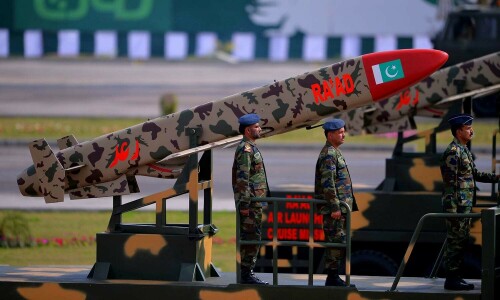
NCA Adviser Gen Kidwai rejects US allegations that Pakistan can target its cities with its missile technology
He said while Pakistan’s nuclear deterrence capability has been a cornerstone of the country’s national security for the past many decades, of late it has assumed even greater significance in the challenging geopolitical and economic environment.
Giving an overview of the emerging strategic environment, he highlighted six important events that took place in the last six years in and around Pakistan in order to get a feel of the challenges that the country faces.
Gen Kidwai said the first event was the Balakot-Rajouri exchange of strategic airstrikes in 2019 between the Indian Air Force (IAF) and the Pakistan Air Force (PAF), consequent to India’s aggressive politico-military posture. The two-day skirmish did not turn out too well for India. While the IAF failed to achieve its objective of striking the alleged terrorist camps in Balakot, the skirmish resulted in the downing of two IAF aircraft by the PAF and the capture of an IAF pilot, Wing Commander Abhinandan. It sent strong signals of deterrence to India. Pakistan’s nuclear deterrence worked, India’s irresponsible conduct as a nuclear power stood exposed before the world, he said.
The second event, he said, was India’s military fiascos against China creating a dilemma of a two-front war for India. China cut India and its military to size without firing a bullet. The Indian military was humiliated by China. The US and the West simply watched. India felt compelled to restore ceasefire in the Line of Control with Pakistan.
The general said the third event was the US withdrawal from Afghanistan. Unfortunately, the Afghan Taliban soon turned on their benefactors resulting in deteriorating internal and external security situations on Pakistan’s western border.
The fourth, he said, was India’s unwarranted attack on Pakistani territory by a nuclear capable Brahmos in 2022 which Pakistan preferred to handle politically. The attack remains another example of “India’s irresponsible conduct as a nuclear power”.
He said the fifth was Iran’s missile strike on Pakistani territory near Panjgur in 2024 which was rather perplexing. Pakistan was left with no choice but to retaliate with appropriate counter-strikes. The in-built message of the counter-strikes brought Iran’s foreign minister rushing to Islamabad to calm down the tensions.
The sixth was a positive development in the shape of Pakistan-Bangladesh rapprochement. The development had India worried, he said.
Gen Kidwai then shifted his focus on Ukraine and West Asia and said the former gave up almost 2,000 nuclear weapons after the fall of Soviet Union. Against the backdrop of the conflict between Russia and Ukraine, he said the consequences are there for everyone to see. The lesson: “Pakistan must continue to preserve and strengthen its nuclear capability against all potential threats.”
He said the rapidly emerging political and military developments in West Asia have now assumed a special significance for Pakistan when read in conjunction with some of the recent US statements and actions against Pakistan’s nuclear and missile programmes. It needs to be monitored with the utmost seriousness.
He said in the geopolitical milieu of today’s global order, China as the emerging superpower poses multiple challenges to the US. Pakistanis should thank our elders who decades ago took the strategic decision of befriending China. “Pakistan will find itself in the right side of history in the coming years.”
After that Gen Kidwai shed light on the emerging challenges for Pakistan. He mentioned the ‘balance’ that Pakistan is compelled to maintain in the South Asian context. He also talked in detail about the US sanctions and rejected the absurd allegations against Pakistan that the country can target the US with its missile technology. Concluding the presentation, the general termed 2024 a normal regulation year.
Ambassador Syed Hasan Habib, chairman of the Pakistan Council on Foreign Relations (PCFR), Karachi was the second speaker at the seminar whose topic was ‘Changing Power Dynamics and Challenges for Pakistan’. He said in 2024 Pakistan grappled with political unrest, economic challenges and security issues. “In the absence of a common national narrative, our foreign policy remains weak. Our track record hasn’t been consistent.”
He, too, underlined issues that Pakistan is faced with in the region and beyond, and suggested that Pakistan should have strategic regional relationships, expand on trade relations beyond its traditional partners, promote its soft power, tackle extremism and develop skilled diplomacy.
Earlier, PIIA Chairperson Dr Masuma Hasan welcomed the guests and introduced the speakers to them.
Published in Dawn, January 26th, 2025