0
0

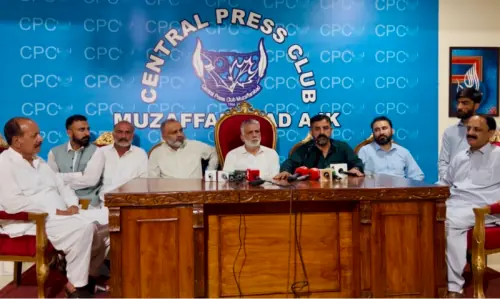
MARDAN: Jamiat Ulema-i-Islam chief Maulana Fazlur Rehman has demanded a solution to the dispute between warring groups in Kurram through the jirga system (a traditional dispute resolution mechanism used in tribal communities), saying that the use of force or imposition of a one-sided decision could further deteriorate the fragile situation in the volatile tribal district.
“Disputed issues have been resolved neither by force nor by one sided decisions. We believe in jirga system. That is why the issue of Kurram should be resolved through a jirga comprising credible and reliable personalities. We prefer jirga in case of resolving issues and disputes as it has the ability to solve problems and issues in a better way,” said the JUI-F chief while talking to media persons here in Mardan on Sunday.
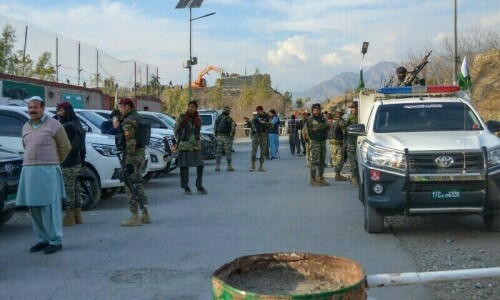
The Maulana expressed these views in reference to the government decision about limited ‘counterterrorism operation’ in some villages of Lower Kurram, after attending a religious programme at Jamia Islamia Babuzai in Katlang tehsil of Mardan district.
“Similarly, the elders of both rival groups have to be taken into confidence in this connection if the government is serious in bringing a durable peace and stability in the volatile region,” he remarked.
JUI-F chief suggests the issue can be resolved through jirga
The JUI-F chief has asked the federal government to include political figures in talks process of Kurram issue.
In reply to a question, he said he apparently did not see any improvement in talks going on between the incumbent federal government and Pakistan Tehreek-i-Insaf (PTI).
The JUI-F chief said: “I pray for success of talks between the government and PTI, but apparently I am not seeing any improvement or breakthrough in the dialogue.”
To another query, he said that every leader of PTI had his own separate statement that was why he did not respond to questions regarding those statements. However, he said he would comment on party’s statements whenever it was needed.
KP rulers ‘not elected’
The JUI-F chief lamented that there was no government in Khyber Pakhtunkhwa because the provincial rulers had lost their writ in many areas of the province.
He alleged that the incumbent provincial rulers had not been elected rather they were given power in KP by some powerful forces. The corruption had broken all its records in history of Khyber Pakhtunkhwa because the province had been handed over to ineligible, unable and immature people, he added.
However, as a political leader he believed in talks, adding that their doors were open for all political parties, including PTI, he said. He added that he and his party had held talks with PTI leadership in the past on the issues of mutual interests and similar talks could be held in future as well.
Published in Dawn, January 20th, 2025