6.8 magnitude quake strikes Japan, prompts tsunami alert

A 6.8-magnitude earthquake struck southwestern Japan late on Monday, causing two small tsunamis in the area but no damage was reported.
The quake struck at a depth of 36 kilometres around 18km off the coast of Miyazaki prefecture in the Kyushu region around 21:19pm, according to the US Geological Survey.
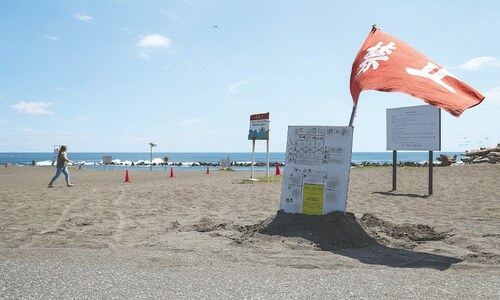
The Japan Meteorological Agency (JMA) warned of possible tsunami waves of up to one metre and urged the public to stay away from coastal waters. “Tsunami can strike repeatedly. Please do not enter the sea or go near coastal areas,” the JMA said on X.
Two small tsunamis of around 20 centimetres were detected at two ports in the region, the weather agency said. Local media reported no immediate injuries, with live television feeds from the region on public broadcaster NHK showing no visible damage as well as calm seas, vessels operating and traffic running normally.
Sitting on top of four major tectonic plates along the western edge of the Pacific “Ring of Fire”, Japan is one of the world’s most tectonically active countries.
The archipelago, home to around 125 million people, experiences around 1,500 jolts every year and accounts for around 18 per cent of the world’s earthquakes.
The vast majority are mild, although the damage they cause varies according to their location and the depth below the Earth’s surface at which they strike.
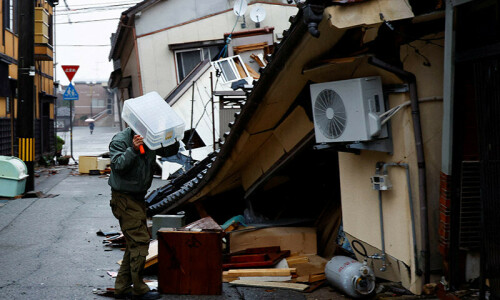
On New Year’s Day, 2024, a 7.5-magnitude quake struck the Noto peninsula, killing nearly 470 people in Japan’s biggest jolt in over a decade, many of them elderly residents in the aftermath.
Last August, the JMA warned that the likelihood of a “megaquake” was higher than normal following a magnitude 7.1 jolt that injured 15 people.
That was a particular kind of tremor known as a subduction megathrust quake, which has occurred in pairs in the past and can unleash massive tsunamis.
The advisory concerned the Nankai Trough, an 800km undersea gully parallel to Japan’s Pacific coast, between two tectonic plates.
The advisory was lifted after a week.
The JMA said today that it was probing possible links between the latest quake.
Japan has strict construction regulations intended to ensure buildings can withstand strong earthquakes and routinely holds emergency drills to prepare for a major jolt.
But the country is haunted by the memory of a massive 9.0-magnitude undersea quake off northeastern Japan in March 2011, which triggered a tsunami that left around 18,500 people dead or missing.
The 2011 tsunami also sent three reactors into meltdown at the Fukushima nuclear plant, causing Japan’s worst post-war disaster and the most serious nuclear accident since Chernobyl.
In March 2022, a 7.4-magnitude quake off the coast of Fukushima shook large areas of eastern Japan, killing three people.
The capital Tokyo was devastated by a huge earthquake just over a century ago in 1923.