0
0
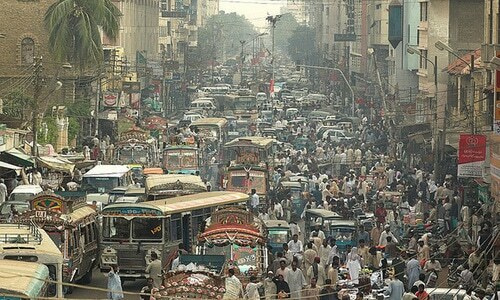
From 1951 to 2006, to respond to the fast-changing social and economic environment, the planners of the city proposed five master plans. Each plan took stock of the existing demand and supply scenario of various sectors through diverse investigation and research techniques, making plans for the future by extrapolating the existing requirements.
The 1951 Merz Rendel Vatten (MRV) Plan stands as a pivotal moment in Karachi’s urban development journey. Recognising the burgeoning city’s needs, the MRV Plan aimed to address infrastructure demands and the looming water crisis. It emphasised exploring groundwater resources and utilising surface water from the Indus River. This forward-thinking approach, however, faced significant roadblocks. Political instability and economic constraints limited the plan’s implementation, leaving Karachi vulnerable to the very challenges it sought to mitigate.
The 1958 Greater Karachi Resettlement Plan, with its focus on housing, marked a shift in priorities. While successful in increasing housing options, it drastically altered the city’s landscape. A key component of this plan involved relocating a significant portion of the city’s population to newly developed satellite towns, such as North Karachi and Korangi. While the plan aimed to alleviate pressure on the city centre and provide improved living conditions, it had significant implications for water provision. The 1958 Resettlement Plan, while intended to address various urban challenges, inadvertently added another layer of complexity to the city’s water supply issues.
The Karachi Development Plan 1974-85 stands out as a beacon of ambition and innovation. Recognising the escalating water crisis, this plan proposed a revolutionary wastewater treatment and reuse system. This pioneering approach aimed to not only address water scarcity but also replenish depleted groundwater reserves. Additionally, the plan advocated for a unified water management body to ensure coordinated efforts. However, the tumultuous political and economic climate of the 1970s hampered full implementation, leaving the visionary plan largely unrealised.
The Karachi Development Plan 1986-2000 built upon the previous plans by aiming to achieve a seemingly impossible feat — 24/7 water supply for all residents. This ambitious goal acknowledged the diverse water consumption patterns across different socio-economic groups. The plan proposed cost-recovery policies based on usage, a progressive approach intended to incentivise conservation. However, its effectiveness was hampered by limitations in infrastructure. Metering implementation remained patchy, and leak reduction efforts were hindered by the dilapidated state of the water distribution network. This highlights the crucial role of infrastructure investment in translating policy intentions into tangible results.
The Karachi Strategic Development Plan 2020
(KSDP-2020) marked the most recent attempt at charting Karachi’s future course. This plan focused on fostering public-private partnerships and improving service delivery. Despite reiterating the importance of water conservation and infrastructure improvements, the KSDP-2020 failed to offer a clear roadmap for achieving these goals.
A recurring theme across all five plans was the emphasis on establishing robust institutional frameworks for plan implementation. However, this crucial aspect often remained neglected. Despite their aspirations, all plans faced challenges, such as political instability, economic limitations and a lack of effective governance. These factors created a significant gap between plan formulation and execution, leaving Karachi’s development in a perpetual state of “almost, but not quite.”
Published in Dawn, EOS, January 5th, 2025