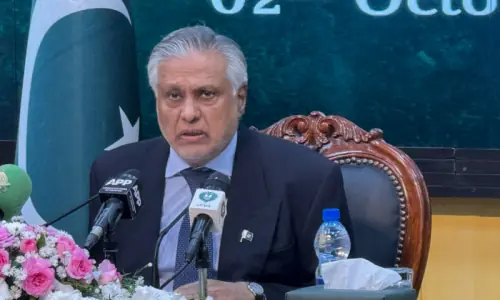
KARACHI: A parliamentary official has suggested that people should “use the internet less” and only for “important matters” , as the country grapples with frequent cyber-slowdowns in Pakistan, Dawn.com reported.
Syed Sajid Mehdi, Parliamentary Secretary for the Cabinet Division, has recently been in the headlines for answering queries fielded by lawmakers in the National Assembly on the issue of sluggish speeds, difficulty downloading media on WhatsApp, and intermittent connectivity across the country.
Mr Mehdi has responded to internet related queries during Question Hour as the Pakistan Telecommunication Authority (PTA) falls under the purview of the Cabinet Division, rather than the Ministry of IT.
In an interview with DawnNewsTV on Sunday, the parliamentary secretary likened the internet in Pakistan to a road, adding that the more people use it, the more congested it would get and the slower people would move.
Parliamentary secy for Cabinet Division calls for curbing ‘unnecessary internet usage’
“There are large loads on our internet, [just] like on a congested road,” he said. “Cars move slower if there is congestion. If 10 people use a road meant for five, it will slow everything down.”
The secretary, whose analogy indicated his limited technical understanding of how the internet actually works, claimed that work was underway to resolve the issue and will be completed “very quickly”.
According to the Associated Press of Pakistan, Mr Mehdi noted that some areas still rely on infrastructure that is over a decades old, which is unable to cater to current demand. However, he assured that efforts were being made to modernise these systems.
He also said that outdated infrastructure, rapid population growth, and increased demand are key factors contributing to slow internet speeds.
Mr Mehdi called for curbing what he termed “unnecessary” use of the internet, saying that would improve speeds. “I’m not saying stop using it, but use it only for important purposes like work, and not for unnecessary purposes,” he said.
This advice seems reminiscent of the slogan ‘Bijli Bachaye, Apnay Liye, Qaum Ke Liye’ (Conserve electricity, for yourself and the nation), which used to be a mainstay of public information campaigns through the 1990s and early 2000s, when Pakistan was facing a chronic power shortage.
When questioned whether people in Pakistan were using the internet unnecessarily, the official replied that people should use the internet mostly for work. “It will be beneficial if people don’t use the internet too much or for negative thinking,” he said.
The parliamentary secretary disagreed with the claim that internet slowdowns were causing financial losses to the IT sector.
When informed that Pakistan Software Houses Association (P@SHA) had informed the parliament about the financial loss, he said: “We have not been told officially that the shutdown has caused financial losses. Nobody has filed any requests or complaints about financial losses. If anyone has suffered personal losses, then that is a different matter entirely.
Published in Dawn, December 23rd, 2024