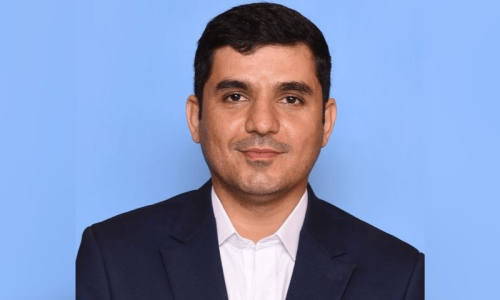
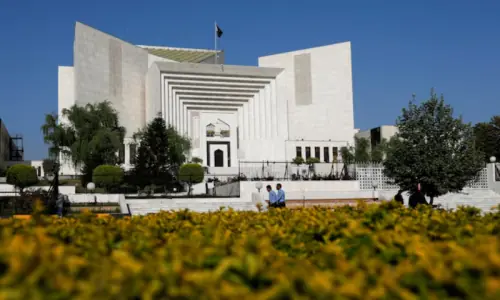
The Supreme Court (SC) on Thursday struck down the Election Commission of Pakistan (ECP)’s verdict to disqualify PML-N lawmaker Adil Bazai, saying the regulator could not justify the move, and restored him as an MNA in an independent capacity.
Considered an “anomaly”, Quetta lawmaker Bazai is part of the PML-N as per official records but is often found on the opposition benches, criticising the government. It is also unclear which party supported him during the February 8 general election.
According to the National Assembly website, Bazai contested the election from Quetta’s NA-262 constituency. A source had told Dawn previously that Bazai won as an independent candidate, but later joined PML-N. Within three days of the election, he submitted an affidavit to the ECP, per the source.
As per the law, an independent candidate cannot switch sides after submitting an allegiance affidavit to the ECP, yet, Bazai has been seen siding with the PTI and SIC members.
The short written order, a copy of which is available with Dawn.com, said: “The impugned judgments passed by the ECP are set aside, and the declarations made by the party head of PML-N that the appellant had defected from the said political party are not confirmed. Accordingly, the appellant’s membership of the National Assembly from seat NA-262 stands restored as an independent member, not as a member of the Parliamentary Party of PML(N).”
Today’s hearing consisted of a three-member bench, headed by senior puisne judge Justice Syed Mansoor Ali Shah and also comprising Justices Ayesha Malik and Aqeel Abbasi.
The SC bench raised questions regarding the procedure of the ECP for the PML-N lawmaker’s disqualification.
“What did the commission do to check the facts in the Adil Bazai case?” Justice Malik asked.
“After getting a letter from baray sahib (greater authority), you de-seat a lawmaker — that is not done,” Justice Abbasi remarked.
“The scale of disfranchising the people of a constituency should be strict,” Justice Shah agreed.
At the outset of the hearing, Bazai’s lawyer Taimur Aslam told the court that that once the matter had reached the ECP, proceedings began the very next day.
“We went to the Balochistan High Court to give us at least the relevant affidavit,” he argued, arguing that the ECP had not even provided them with the affidavit.
Justice Malik replied that the ECP had declared the document to be confidential and therefore could not be handed to them.
Meanwhile, when ECP’s director general (law) was called to the rostrum by the court, Justice Malik wondered under what circumstances the ECP accepted an affidavit as true without inquiry.
“One winner is saying it is mine, the other is saying it is not mine,” she observed, before rhetorically asking if the ECP could say that only one affidavit was not liked by them.
The SC bench accepted Bazai’s appeal against the ECP’s decision to disqualify him under Article 63A, restoring the lawmaker to his seat and declaring the ECP’s decision to unseat him from Quetta’s NA-262 constituency null and void.
The court said that the commission could not justify the disqualification of the lawmaker.