0
0

FAISALABAD, April 13: The city district nazim on Thursday presented a surplus budget of Rs6.36 billion for the year 2005-06 with a prospective grant of Rs860 million from the president.
Presenting the budget document before the house, nazim Rana Zahid Tauseef said Rs6.36 billion would be collected from various heads, including special grants and taxes.
The nazim said Rs3,812 million would be spent on payment of salaries to local government employees, Rs418 million on uplift projects, Rs293 million on union council schemes, Rs5 million on streetlights, Rs10 million on school buildings and Rs10 million on modernisation of health institutions.
He said an amount of Rs566 million had been allocated for the projects under the Citizens Community Boards, Rs20 million for agriculture, Rs237 million for the health sector, Rs14 million for information technology and Rs15 million for sanitation purposes.
Convener Mian Amjad Yaseen asked the council members to present their suggestions on Friday.
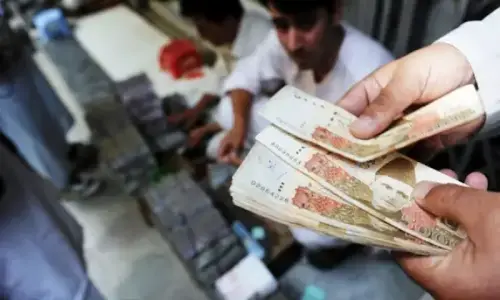
consumer items: Almost all multinational and local food manufacturing companies have enhanced the prices of their products by 10 to 15 per cent during the last one week or so without any formal announcement.
During a round of the city markets here, it was observed that a renowned tea manufacturing firm producing two major brands had enhanced the prices of its 200 gram pack from Rs59 to Rs65.
A pack of shampoo, which was available in the market at Rs108, is now being sold at Rs117 while the toilet soap prices have been enhanced from Rs1 to Rs21.
Powder milk pack which was available at Rs20 is now being sold at Rs22 while a bottle of fruit-jams which was available at Rs50 is now being sold at Rs55. The prices of 250 gram honey bottle has been enhanced from Rs70 to Rs85. Several other items have seen a sharp increase in prices in a week.
Market sources claimed that the wholesaler dealers had enhanced the prices of kitchen articles on their own which deteriorated the situation. The present price spiral in the market is very high compared to all the previous increases made in the prices of consumer goods during the last couple of decades.