A POPULAR saying I have been hearing since childhood is: “Safaai nisf iman hai” (cleanliness is half the faith). Today, the ‘Queen of the East’, as Karachi was once dubbed by Sir Charles Napier, has lost its faith. It needs a good scrub.
When it comes to rankings, the city certainly flies high or trails far behind, whichever way you prefer to put it. Not too long ago, the Economist’s Intelligence Unit evaluated 173 cities in the world in terms of their livability. Environment and infrastructure were two factors among others that were taken into account. Karachi ranked 169th.
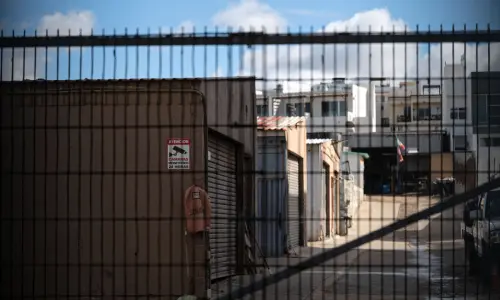
In terms of pollution by solid waste, the city has the worst record in the country. Solid waste makes the city unliveable and also has a negative aesthetic dimension. Karachi generates 16,500 tons of solid waste every day, but barely two-thirds of it is collected to be sent to the handful of landfill sites on the outskirts of the city. The remaining waste adorns street corners and open plots and can also be seen in the middle of the road. The Sindh Solid Waste Management Board set up in 2014 has failed to do its job. Its poor performance is on public display.
Not enough has been written about the impact of urban pollution on human health. Even the Pakistan Medical Association seems to have resigned itself to people learning to live with urban waste in their vicinity. So focused is the medical profession on the curative approach that most of its practitioners fail to mention that a cleaner city would mean fewer illnesses and less out-of-pocket expenditure for patients.
They should also sort out the waste they generate in their homes.
One point of view is that the solid waste problem is a class issue. In his South Asian Idea (a web-based periodical) Anjum Altaf writes about the future of the city in South Asia. He does not hold out much hope for our cities: “…each South Asian city has split into two — the rich enclaves and the poor slums. At the same time, the discovery that disease is spread by germs not polluted air has shifted the focus from collective sanitation reforms to protection of the individual through immunisation. The rich have thus also isolated themselves from the diseases of the poor. As a result, there is no powerful lobby of influential citizens behind urban reform that benefits the entire city.”
He asks: “Is the South Asian city doomed to a schizophrenic and split future?”
However, Karachi does not exactly fit this description. The metropolis is certainly divided into localities inhabited by people from different income groups. But these areas are not totally detached from one another. In fact, the more affluent among them are often ringed by squatters’ settlements that supply menial labour to serve rich households. Hence our society may be schizophrenic but not the city.
Defence Housing Authority, the most affluent and ostentatious of all residential areas, also has its share of solid waste heaps and dilapidated roads. The residents’ problems are no different from those of their kin in Nazimabad and Gulshan in this respect. The problems of the rich, however, are much smaller in size and complexity. Moreover, money solves a number of them. Still, the problems exist, testifying to the parity that marks Pakistanis’ temperament vis-à-vis ‘rubbish’.
From where do we begin Operation Clean-up? While the removal of primary waste from public collection points and transporting the solid waste to the dump is obviously the duty of the municipal authorities, the people also have a role to play. Our disregard for cleanliness in public places knows no class barriers. I have seen the richest of rich lower the window of their air-conditioned Pajero and hurl a bagful of kitchen waste towards a garbage can on the road corner. Needless to say, the aim was not perfect.
On their part, the people should help by not littering public places. They should also sort out the waste they generate in their homes into three categories: organic kitchen waste for composting, paper and glass for recycling, and plastic waste that is given a decent burial. The local government should take over at this point, and provide practical collection points from where the waste, sorted out, is carried to the correct destination.
Once I was told by my host in a Southeast Asian country that children taught the virtues of cleanliness in school learn fast. This practice teaches the child the dignity of labour as well. The only school in Karachi I know that does this is The Garage School that celebrated its silver jubilee last week. Its premises are spick and span as the students sweep their classrooms themselves. Other schools should be doing the same to create a vested interest in cleanliness in those who spend their time there.
Published in Dawn, November 29th, 2024