America and Pakistan are two totally different countries, and their democracies are very different breeds. Yet the recent US elections have some relevance, if not lessons, for Pakistan.
The majority of Trump supporters were no doubt concerned about jobs, inflation, and open borders. But more important than that, they felt neglected and marginalised by democracy, more precisely by the politicians.
The shine had long come off the vaunted democratic system of America. Politics had become all about the pursuit of power. The system was largely led by the elites who competed with each other for power, minimally satisfying the needs of their core supporters, without reference to the aspirations of the public at large.
Trump challenged the status quo with his insurgent politics. The majority of his supporters were ‘unheard and unseen’ little people, working-class folk, many of whose lives revolved around economic hardships and challenges, family breakdowns, and drifting youth in search of purpose. American democracy had left them behind. Trump made them feel important.
Different people voted for Trump for different reasons but one theme was common. They were all supporting him to overthrow a system they felt had let them down. The NBC reported that at the exit polls when voters were asked what quality mattered most to them in a candidate, the majority said they wanted either someone with ‘the ability to lead’ or one who could ‘bring about needed change’.
Neglected people have thought of similar solutions.
There is a certain parallel here with the situation in Pakistan where a democracy in name gives respectability to the well-entrenched system of elite capture but lacks legitimacy and moral purpose. It is a democracy needed by the elite but unwanted by people.
Pakistan’s democracy is just a political tool for the dominant social groups to maintain their wealth and status. The beneficiaries are justifiably seen as the whole panoply of power — the top tier of politicians, bureaucrats, the military and judiciary, business people and the landed, many of whom monopolise the country’s economic resources.
Ironically in both countries, neglected people have thought of similar solutions, gravitating towards extremists or populists who they think would fight the system on their behalf. Trump widened his support base by fusing populism with extremist White/ Christian nationalism and by fomenting his supporters’ belief that the politicians and politics had failed them.
Pakistan’s populist had a similar playbook. He saw that there was a large body of disinherited, marginalised people including dispirited and drifting youth looking for desperate solutions; some of them had been lured by the extremist agenda. A range of grievances had been released in Pakistan thanks to the media explosion which the ruling elite had not addressed. He took up their cause.
By stoking long-standing public anger and feelings of injustice at the hands of the country’s established political leadership, and a sense of victimhood, incited by the US-led post 9/11 wars, and by supporting the Afghan Taliban, Imran Khan evoked powerful emotions of morality, nationalism and religion appealing to large numbers of Pakistanis at home and abroad.
Most of Khan’s supporters were those who felt neglected or oppressed. Like Trump he said what his base wanted to hear but made them believe that these were his own views, thus creating an illusion that he spoke for them. In conditions of despair and frustration, poor people found easy solace and escape in the idea of being protected by a ‘saviour’. The young and educated found inspiration about the future of the country. And the diaspora looked up to him to restore their pride in the country.
The people saw that regular politicians neither spoke to nor for them, and asked themselves what democracy had done for the common man, the minorities, women and the smaller provinces especially Balochistan.
Populists may be wrong but their supporters are invariably right. The popularity of populists basically shows that something is wrong with the system. You cannot extinguish the hope they kindle by treating them as ‘arsonists’. The way to deal with them is to let them come to power if they win in free and fair elections. If they succeed that is good for the country. If they fail then people will discover they are not what they had put their faith in. That too will be good. They should not be suppressed. They can be diminished only politically.
If suppressed, the restless, aggrieved and alienated PTI supporters will never be reconciled, which will lead to a large swath of the population continuing to disrupt or destabilise the system. Is this good for the country or for democracy?
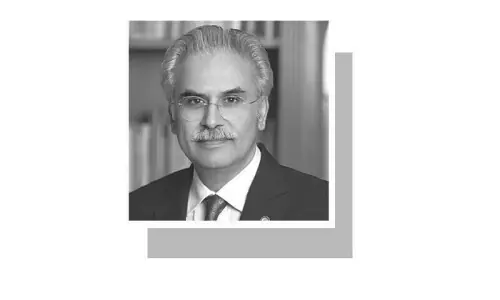
The writer, a former ambassador, is adjunct professor Georgetown University and Visiting Senior Research Fellow National University of Singapore.
Published in Dawn, November 27th, 2024