G20 summit kicks off with global pact to fight hunger, poverty


 0
0


RIO DE JANEIRO: Brazil’s President Luiz Inacio Lula da Silva opened the summit of the Group of 20 major economies on Monday with the launch of a global alliance to combat poverty and hunger that more than 80 countries have agreed to back.
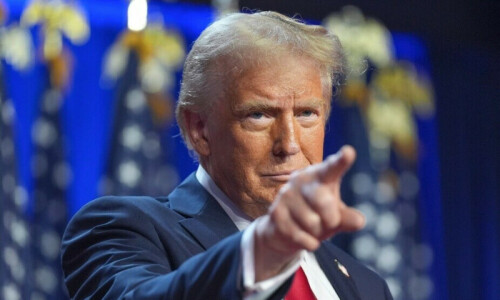
As G20 leaders met at Rio de Janeiro’s Modern Art Museum for two days of talks, their agenda highlighted a shifting global order as US president-elect Donald Trump returns to power.
Their discussions of trade, climate change and international security will run up against the sharp US policy changes that Trump vows upon taking office in January, from tariffs to the promise of a negotiated solution to the war in Ukraine.
In his opening remarks, Lula said the devastating effects of a changing climate can be seen around the world, calling for action by leaders on hand to address global warming and poverty.
Chinese President Xi warns the world faces ‘a new period of major changes’
The alliance he launched, coordinating global efforts to eradicate hunger and poverty, is backed by the AU and EU, international organisations, development banks and philanthropies such as the Rockefeller Foundation and the Bill & Melinda Gates Foundation.
“Hunger and poverty are not the result of scarcity or natural phenomena … they are the product of political decisions,” said Lula. “In a world that produces almost 6 billion tons of food per year, this is unacceptable”, he said.
Diplomats drafting a joint statement for the summit’s leaders have struggled to hold together a fragile agreement on how to address the escalating Ukraine war, even a vague call for peace without criticism of any participants, sources said. Russian President Vladimir Putin did not attend the summit, and Moscow was represented by Foreign Minister Sergey Lavrov.
Security in Rio de Janeiro has been strengthened with troops reinforcing police for the duration of the summit.
Most powerful man
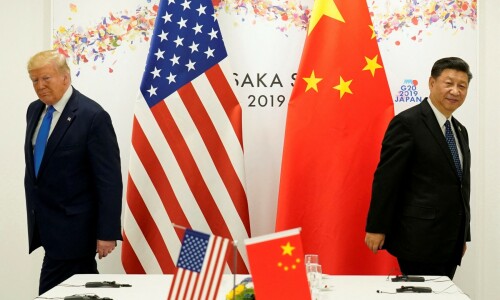
While US President Joe Biden arrives as a lame duck with just two months remaining in the White House, China’s President Xi Jinping will be a central player at a G20 summit riven with geopolitical tensions amid the wars in Gaza and Ukraine.
Xi announced measures to support the “Global South,” and said China would support development building a “high quality” Belt and Road Initiative, his signature foreign policy plan that directs large Chinese investments to infrastructure projects in the developing world, Chinese state television CCTV reported. Xi warned the world faces “a new period of major changes”.
In a nod to the return of China hawk Trump, Xi told British Prime Minister Keir Starmer the world was “entering a new period of major changes.” As leaders lined up to meet the most powerful man in Rio, Xi added that Britain and China would “shoulder the important task of… responding to global challenges.”
Dispersed measures
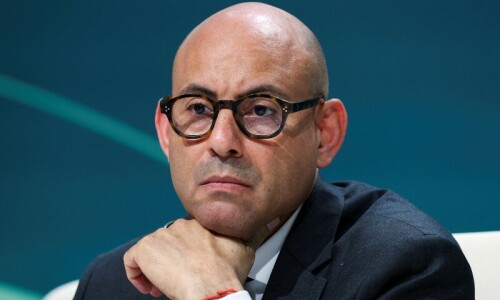
G20 leaders are under pressure to try rescue UN climate talks in Azerbaijan, which have stalled on the issue of greater climate finance for developing countries.
UN Secretary General Antonio Guterres has called on the world’s biggest economies, who account for 80 per cent of global emissions, to show “leadership” on the issue in Rio. The UN is seeking $1 trillion a year for developing countries to cope with global warming.
Brazil is leading a push for higher taxes on billionaires. But Lula has reportedly faced resistance from Argentine President Javier Milei, who brags that Trump is inspired by his low-tax, cost-cutting agenda.
Argentina’s lead negotiator on the summit text, Federico Pinedo, said that Buenos Aires has raised some objections and would not “necessarily” sign the text. He did not elaborate. But a Brazilian foreign ministry source on Monday downplayed the likelihood of Argentina blocking a consensus.
Published in Dawn, November 19th, 2024