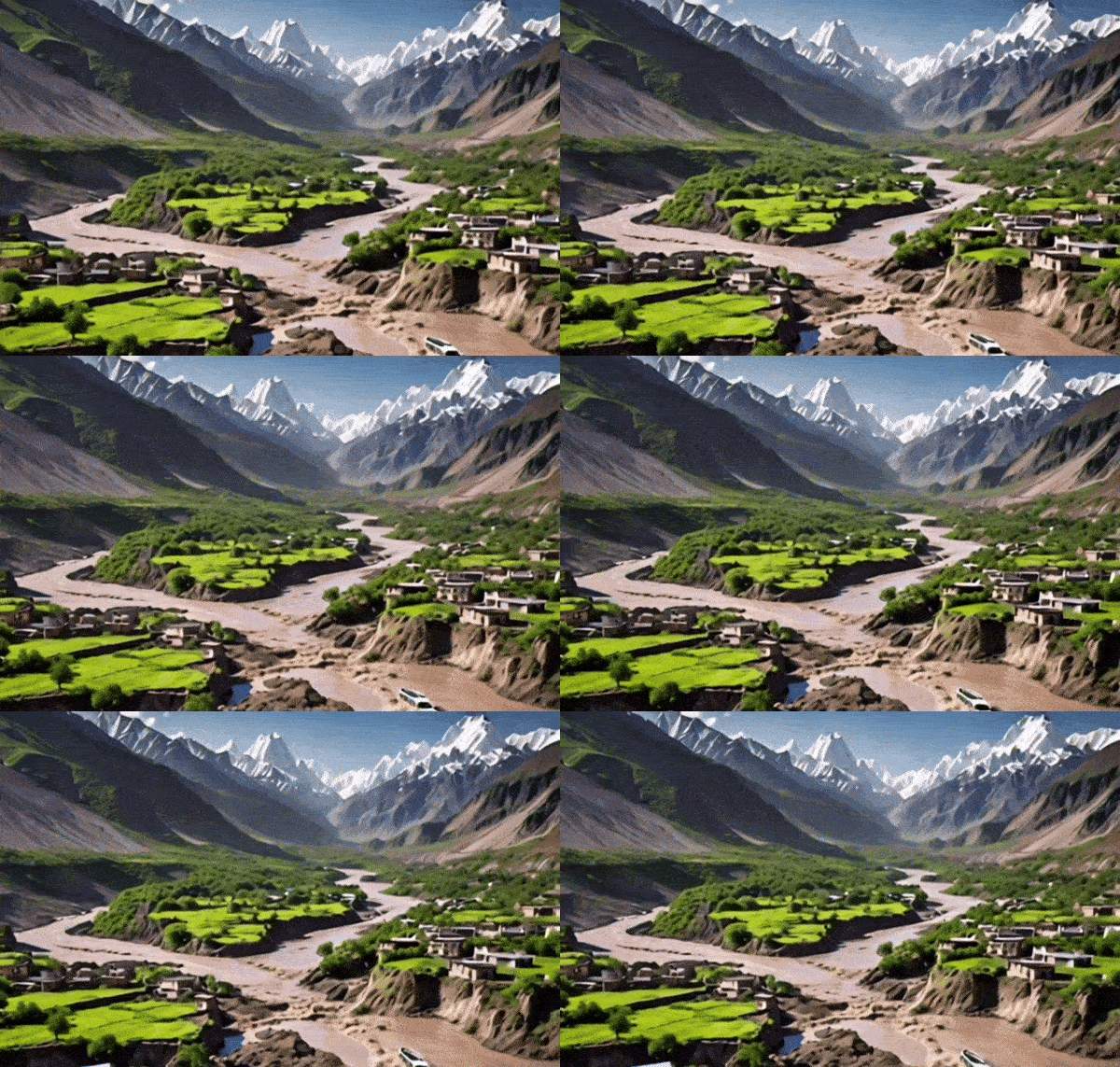
ISLAMABAD: The Asian Development Bank (ADB) has announced a regional programme for Central Asia and South Asia, including Pakistan to mitigate the impact of melting glaciers.
The ‘Glaciers to Farms’ programme will invest in water and agriculture infrastructure and support vulnerable communities threatened by glacier melt, particularly in fragile mountain regions.
The programme aims to mobilise funding of $3.5 billion from ADB, Green Climate Fund, governments, development partners, and private sector, the bank said in a statement.
The lending agency will conduct risk assessments of glacial melt in Azerbaijan, the Kyrgyz Republic, Tajikistan, and Uzbekistan to form the “scientific and technical basis for the Glacier to Farms programme”.
While citing the rationale for this programme, the statement said temperatures in the region are projected to rise by up to 6°C by 2100. This will result in the loss of glacial mass which threatens the “fragile balance of ecosystems”.
It also jeopardises water supply for agriculture and hydropower and risks the livelihoods of more than 380 million people.
Moreover, with around 2 billion people in Asia relying on meltwater from glaciers and snow, “accelerated glacial melt will affect the region’s water security”.
According to ADB, glacial retreat, changes in snowfall patterns, and altered monsoon patterns contribute to shifts in water availability, affecting river flows and impacting water-dependent sectors such as water supply, irrigation agriculture and hydropower.
In upstream areas, shrinking glaciers diminish water flow, impacting local agriculture and increasing water shortages. Downstream, increased glacial runoff can cause floods.
A declaration to support the initiative was signed by the top environment officials from Azerbaijan, Kazakhstan, Kyrgyzstan, Tajikistan and Uzbekistan with ADB President Masatsugu Asakawa on the sidelines of the COP 29 summit in Baku.
Minister of Finance Muhammad Aurangzeb and Georgia Minister for Economy and Sustainable Development Genadi Arveladze also attended the COP29 side event, the ADB statement added.
Other than the Glaciers to Farms initiatives, the ADB is establishing early warning systems and climate-resilient infrastructure in the Hindu Kush Himalaya to help Asia adapt to melting glaciers.
An ADB report has warned that water flows in the rivers of the Hindu Kush Himalaya will peak by 2050, mainly due to the melting of snow and glaciers, and then start to decline for the remainder of the century. “This poses serious threats to both the environment and the people in the region.”
Too much water will increase the frequency and intensity of hazards such as floods and glacial outbursts, the report said, adding that reduced water supply threatens food security and the viability of major industries such as hydropower.
Published in Dawn, November 18th, 2024