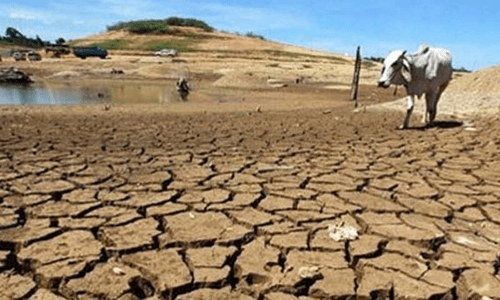
ISLAMABAD: The Pakistan Meteorological Department has cautioned farmers of Khyber-Pakhtunkhwa, Gilgit-Baltistan and Azad Kashmir to rely more on other means of irrigation where available as below-normal rainfall will likely lead to reduced soil moisture during wheat sowing season.
The Met Office, in its outlook for November to January (2024-25), says reduced soil moisture as a result of below-normal rain would potentially impact early rabi crop sowing in KP, GB and Kashmir. The below-normal rainfall may also reduce water replenishment in reservoirs, impacting water availability for irrigation and the power sector.
According to the Met Office, La Nina phenomenon is favoured to emerge in November and is expected to persist through the November-January period, whereas the Indian Ocean Dipole (IOD) index is predicted to return to near normal during the November-December period.
Met Office cautions farmers in KP, GB, AJK about reduced moisture during sowing season
The forecasted dry conditions could result in lower water availability for irrigation, especially in rain-fed (Barani areas). Near-normal rainfall in southern regions may provide more favourable conditions for crop growth in Sindh and southern Punjab.
The Met Office warned that the above-normal temperatures may promote pest and diseases in winter crops, necessitating proactive pest and weed management in regions where warmer, dry conditions could stress crops.
The federal government has set the wheat production target for 2024-25 at 33.58 million tons, to be sown on an area of 10.38 million hectares.
The Irsa advisory committee has anticipated a shortage of water to the extent of about 16 per cent for Punjab and Sindh.
Meanwhile, the Food and Agriculture Organisation (FAO) of the United Nations says in its Crop Prospects and Food Situation Triannual Global Report that below-average precipitation amounts, forecast during the main cropping season could adversely impact the 2025 wheat production, the country’s main food staple, and further aggravate acute food insecurity situation.
In Pakistan, the report says, the area planted with wheat is forecast to be near average. In the remaining countries of the sub-region, where only small quantities of wheat are produced, plantings are expected to be above average, driven by strong domestic demand for wheat-based products. Overall, the availability of irrigation water, quality seeds, fertilisers and herbicides is adequate, which is expected to benefit yields.
Published in Dawn, November 11th, 2024