National industrial policy to be readied this month: industry minister


 0
0


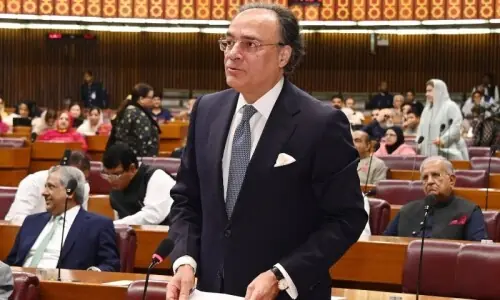
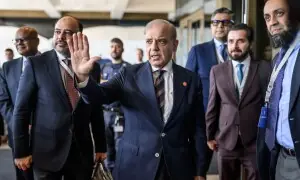
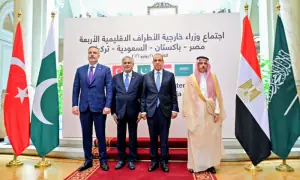
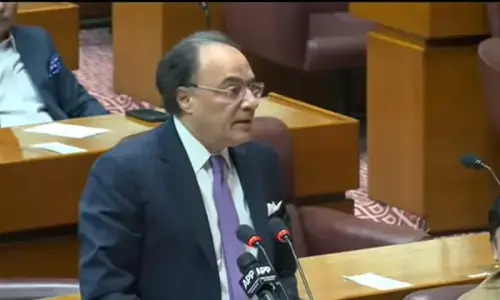
ISLAMABAD: Pakistan is in the process of formulating a national industrial policy to provide an enabling environment for the development of local industry as well as attracting foreign investment, Minister for Industries and National Food Security Rana Tanveer Hussain told the Multilateral Industrial Policy Forum in Riyadh on Thursday.
Speaking at the forum, organised by the United Nations Industrial Development Organisation (UNIDO), Mr Tanveer explained that the policy would be finalised in the current month and to effectively align with national and regional Sustainable Development Goals (SDGs) for maximum impact, a comprehensive and integrated approach was being adopted.
The minister said the strategies being applied include prioritising high-impact sectors, regional collaboration, inclusive stakeholder engagement, incentivising sustainable practices and strengthening governance and policy coherence. He said the policy would focus on sectors such as steel, cement, mining, petrochemicals and chemicals, fertiliser, heavy mechanical, non-ferrous metals, plastics and composites, fisheries, transport and logistics.
“The policy will also cover value-added/general value-added goods (GVG) sectors such as auto-parts, tractors, parts and accessories of office machines, travel accessories, furniture, footwear, synthetic and non-traditional textiles and garments, food processing, surgical and medical devices, electronics, and pharmaceuticals,” he added.
A prominent aspect of the policy is the green energy initiative. The transport sector accounts for over 75 per cent of total commercial oil consumption. Pakistan spends over 65pc of its foreign exchange reserves on fuel imports.
For mitigating this situation, the minister said de-carbonisation in the transport sector and adoption of electric vehicles (EVs) such as electric two and three-wheelers, decentralised power storage, batteries, solar cells, and charging stations were being adopted in Pakistan.
He informed the forum that 48 companies have been issued manufacturing licences by the Ministry of Industries and Production, enabling them to produce two to three-wheeler electric vehicles in Pakistan. “The solar energy sector is also fast-growing due to market demand,” he added.
He informed the forum participants that about nine solar panel assemblers were operating in the country. Pakistan is committed to renewable energy, with solar PV projected to reach 30pc of its energy mix by 2030.
Published in Dawn, October 25th, 2024