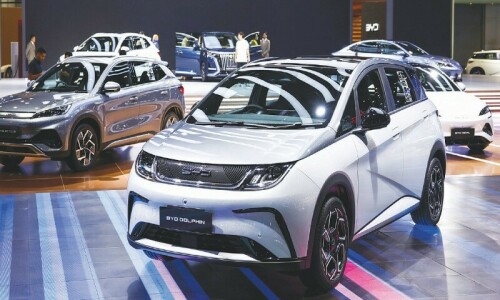
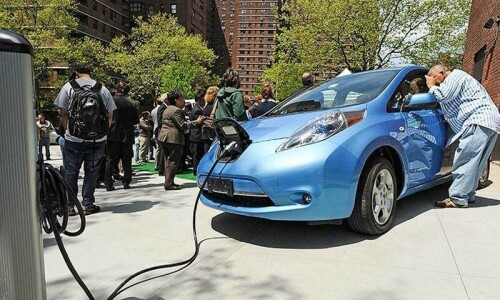
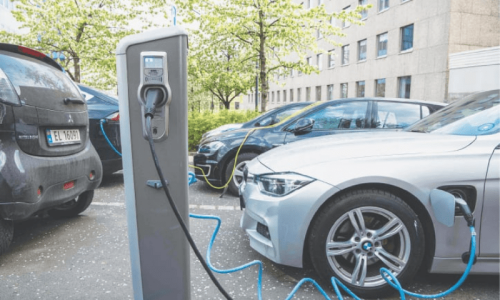
Let’s be honest: battery electric vehicles (BEVs) or just pure electric vehicles (EVs) are hyped up everywhere, thanks to Tesla and the Chinese EV brands. People are talking about how they are the future, how they’ll save the environment, and how they’ll revolutionise car ownership. But here’s the burning question for us: Is Pakistan even ready for EVs, or are we chasing a dream that’s too big for us right now?
Sure, BEVs and EVs sound fantastic on the internet. They don’t burn fossil fuels, they’re supposedly better for the environment with zero tailpipe emissions, and most EV-producing companies claim users will save money in the long run. But here’s a reality check: think about how many charging stations you’ve seen around your city. Can you drive an EV from Karachi to Islamabad without worrying about where you’ll charge it? It seems like we’re talking about an EV revolution, but the infrastructure in Pakistan is practically non-existent.
Car companies are selling people this “green future” without a substantial number of places to charge your car. It’s like being promised a shiny, new toy that we can’t even use properly.
Pakistan’s urgency in adopting EVs is unrealistic given the lack of infrastructure, high costs, and unstable electricity supplies
Hybrids vs pure EVs: the real debate
Now, some might argue that hybrids (hybrid electric vehicles and plug-in hybrid electric vehicles) are a more practical option for Pakistan. After all, they use both electricity and gasoline, so you won’t be stranded with a dead battery in the middle of nowhere. However, here’s the kicker: hybrids still burn fossil fuels, especially on highways; these are just regular gasoline cars. It ought to be considered whether they really help us get off imported oil or just act as a band-aid solution that makes us feel better.
Pure EVs, on the other hand, run entirely on electricity, and in Pakistan, about 59 per cent still comes from fossil fuels. So we aren’t really being as green as we think. We’re just shifting the problem from our car engines to our imported coal and furnace oil-fired power plants.
The money factor: affording an EV
Let’s talk about money. EVs are not cheap, and while we’re all dreaming of a greener, more sustainable future, it’s important to consider how many people in Pakistan can actually afford an EV. Even with government incentives, these cars are still completely built-up cars and far out of reach for most consumers, leading us towards a solution that only benefits the wealthy while leaving the rest of the population stuck with gas-guzzling cars.
And let’s not forget the upfront cost vs the long-term savings argument. Yes, EVs are cheaper to run in the long term, but that’s assuming you can afford to buy one in the first place. In reality, it doesn’t really make sense to buy a Rs15 million Deepal S07 pure EV when you can buy a similar-sized sister brand Oshan X7 Euro 6 gasoline for under Rs9m.
The energy crisis: considering grid capability
Here’s another problem no one seems to be talking about: Pakistan’s energy crisis. Total electricity production during July-March FY24, as per the Pakistan Economic Survey 2023-24, stood at 92,000 GWh, while we consumed only 68,500 GWh due to poor transmission lines. As a result, we face regular power outages and an unreliable grid, and now we’re talking about adding thousands of EVs to the demand.
It’s difficult to imagine whether our grids can even handle this extra demand. In all likelihood, charging your car at home turns into a nightmare if and when the power cuts out mid-charge.
The elephant in the room
Everyone is so focused on pushing electric cars as the future, but here’s something controversial to think about: Are EVs really the best solution for Pakistan’s transportation and energy problems, or are we just copying what’s happening in the West without thinking about what’s realistic for us?
It would be a better idea to invest in improved public transport instead while upgrading the existing infrastructure before rushing into EVs. These are the questions we need to ask before jumping on the EV bandwagon.
The writer has 20 years of experience in the automotive industry in marketing and business strategy.
Published in Dawn, The Business and Finance Weekly, October 14th, 2024