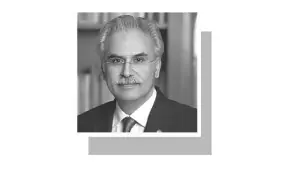
Indian FM Jaishankar rules out bilateral talks at SCO summit in Pakistan



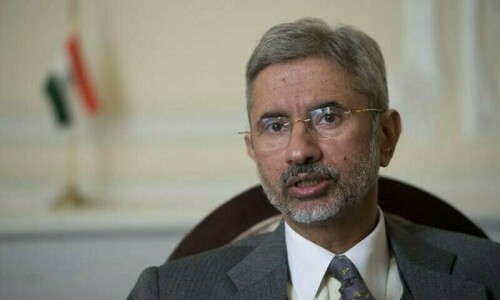
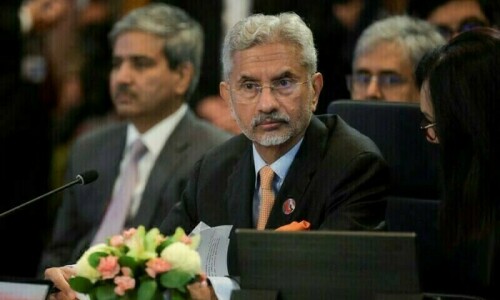
India’s Minister for External Affairs Subrahmanyam Jaishankar on Saturday said he would not discuss bilateral relations when he visits Pakistan this month, the first such visit in nearly a decade, for the Shanghai Cooperation Organisation (SCO) summit.
“I expect there would be a lot of media interest because of the very nature of the relationship,” Jaishankar said in response to a query at an event in New Delhi.
“But I do want to say it will be for a multilateral event. I am not going there to discuss India-Pakistan relations,” he added.
“I am going there to be a good member of the SCO but since I am a courteous and civil person, I will behave myself accordingly,” he said.
The Indian foreign ministry confirmed a day ago that Jaishankar will visit Pakistan to participate in the summit on Oct 15-16 but did not say if he would meet any Pakistani leaders on the sidelines.
Relations between the two countries have gone through periods of thaw from time to time but have been largely frozen since they downgraded diplomatic ties in tit-for-tat moves in 2019.
Earlier, the Foreign Office (FO) had confirmed that Prime Minister Modi was invited to the SCO Council of Heads of Government meeting, which Pakistan is hosting on Oct 15-16, under its rotating chairmanship.
FO spokesperson Mumtaz Zahra Baloch had said, “An invitation has also been sent to the Prime Minister of India, Narendra Modi,” adding that some countries had already confirmed their participation in the meeting.
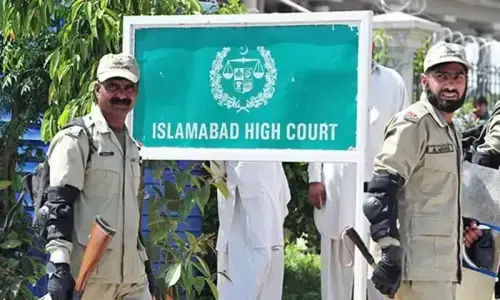
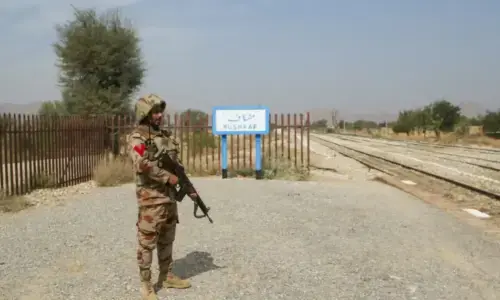
Meanwhile, a comprehensive security plan for the upcoming SCO summit was approved on Wednesday at a meeting chaired by Federal Minister for Interior Mohsin Naqvi.
The interior minister said additional personnel from Pakistan Army, Rangers, FC and Punjab police will be deployed to ensure foolproof security for the guests.
In May last year, then-foreign minister Bilawal Bhutto-Zardari had visited India to attend the two-day meeting of the SCO Council of Foreign Ministers.
He was the first Pakistani foreign minister to visit India in almost 12 years.
At a Senate panel later that month, Bhutto-Zardari called it a “productive and positive decision” to participate in the event.
“As far as the Kashmir issue, bilateral issues between Pakistan and India, and the responsibilities of multilateralism are concerned, my conclusion after the trip is that it is a productive and positive decision to participate in the event,” he had said.
Similarly, former adviser on foreign affairs Sartaj Aziz visited Amritsar in December 2016 for the Heart of Asia conference. Additionally, when India hosted the SCO Council of Heads of State on July 4, 2023, in a virtual format, Prime Minister Shehbaz Sharif participated, demonstrating Pakistan’s willingness to engage despite the strained bilateral relations with India.
India’s participation in the SCO, even otherwise, is a delicate balancing act, weighing its need for regional security cooperation against its wariness of China’s growing influence within the organisation. By engaging selectively in SCO’s economic strategies, India is pursuing a nuanced approach that aims to counterbalance Chinese dominance while fostering constructive ties with Central Asian nations.
India’s hesitation to attend meetings in Pakistan is a well-established stance, dating back to its boycott of the 19th Saarc Summit in November 2016, which was to be hosted by Pakistan. The boycott led to a stalemate, leaving the regional body in limbo, as the Saarc charter mandates that all member states must be present for a summit to take place. In contrast, the SCO has no such restriction, allowing for more flexibility in its meeting arrangements.