0
0


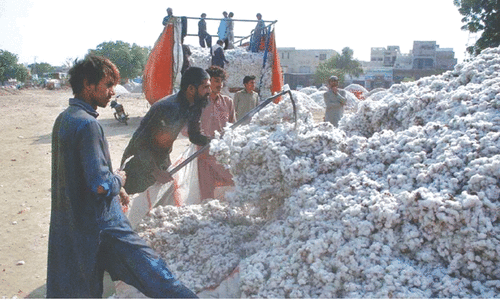
LAHORE: The local textile industry is bracing for a financial crisis in the form of costlier cotton imports due to a sharp decline in the domestic production, with the output unlikely to exceed five million bales this year.
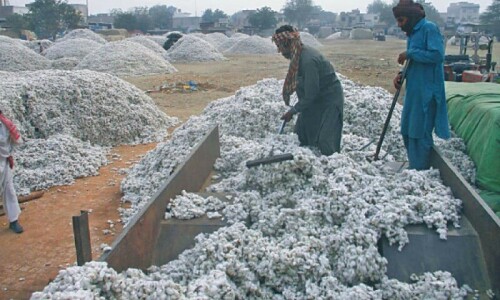
According to figures released by the Pakistan Cotton Ginners Association (PCGA) on Thursday, total cotton arrivals at ginning factories as of Sept 30 stand at 2.039 million bales — a 60 per cent drop from the 5.025m bales recorded on the same date last year.
In Punjab, only 171 ginning units are currently operational, down from 385 last year. The province has produced just 726,000 bales so far, marking a 65pc decline from the previous year’s 2.069m bales. In Rahim Yar Khan district, which historically led cotton production, only 12,000 bales have reached the ginning units, representing a steep 95pc drop from last year.
Sindh has also seen a significant decline, with cotton production down 56pc to 1.313m bales compared to 2.956m bales in 2023. The highest yield in Sindh, 0.852m bales, was reported from the Sanghar district.
Local production expected to remain below 5m bales this season
The Federal Committee on Agriculture had set a cotton production target of 10.8m bales for the year. However, the PCGA data suggests that this target is now unattainable, forcing the textile industry to rely heavily on imported cotton.
Ihsanul Haq, chairman of the Cotton Ginners Forum, fears that total cotton production may remain below five million bales, necessitating cotton imports worth over $2 billion. Textile mills have already signed agreements to import three million bales.
The Pakistan Cotton Brokers Association’s secretary, Sundas Ayub, said that while the number of operational factories and cotton arrivals is slowly increasing, the crop is expected to yield around 4.5m bales this season.
Some observers attribute the unusual fall in cotton output to the unregistered cotton trade, which has surged due to the absence of a track-and-trace system, aimed at preventing evasion of the heavy taxes imposed on the sector in the recent budget.
Karachi Cotton Brokers Forum Chairman Naseem Usman has expressed doubts about the PCGA figures, calling for the swift implementation of the track-and-trace system, as promised by the government, to provide a reliable inventory of the local cotton stock and alleviate confusion in the market.
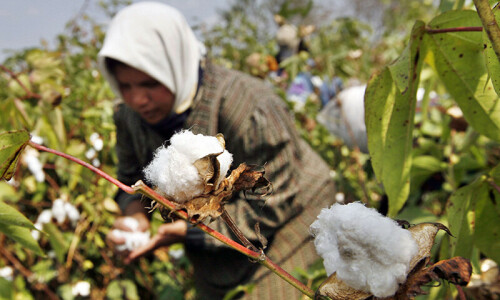
Explaining the reasons behind the production shortfall, Sajid Mahmood from the Central Cotton Research Institute said delays in early sowing caused by cooler temperatures, followed by a prolonged heatwave during the crop’s maturing period in May and June, significantly impacted yields.
The situation was exacerbated by heavy monsoon rains and infestations of whiteflies and pink bollworms. Additionally, Punjab only managed to sow cotton on 3.2m acres, falling short of the 4.3m-acre target.
To boost cotton production, Mr Mahmood suggests that the government allocate more funds to the Pakistan Central Cotton Committee for research and development of heat-tolerant, high-yield cotton seeds.
Mr Haq of the Cotton Ginners Forum also advises the government to make farm inputs tax-free rather than providing farmers with a relief package, while also setting support prices for all major crops and ensuring farmers receive these prices.
Published in Dawn, October 4th, 2024