Food aid to Gaza falls as Israel sets new aid rule


 0
0


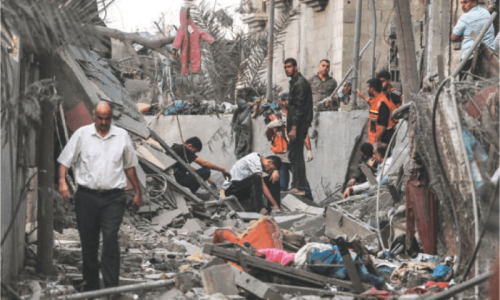
GAZA: Food supplies to Gaza have fallen sharply in recent weeks because Israeli authorities have introduced a new customs rule on some humanitarian aid and are separately scaling down deliveries organised by businesses, people involved in getting goods to Gaza said.
The new customs rule applies to truck convoys chartered by the United Nations to take aid from Jordan to Gaza via Israel, seven people familiar with the matter said. Under the rule, individuals from relief organisations sending aid must complete a form providing passport details, and accept liability for any false information on a shipment, the people said.
As a result, shipments have not been getting through the Jordan route — a key channel in Gaza supplies — for two weeks.
In a parallel move, Israeli authorities have restricted commercial food shipments to Gaza. UN data shows that in September, deliveries of food and aid sank to their lowest for 11 months.
The twin restrictions, which have not been previously reported, have reignited concerns among aid workers that pervasive food insecurity will worsen for the 2.3 million Gazans trapped in the occupied Palestinian territory. “Lack of food is some of the worst it’s been during the war, these past weeks especially,” Nour al Amassi, a doctor who works in southern Gaza, said by phone.
“We thought we’d been able to get a hold on it but it’s got worse. My clinic treats 50 children a day for various issues, injuries and illness. On average 15 of those are malnourished.”
The number of trucks carrying food and other goods to Gaza fell to around 130 per day on average in September, according to Cogat statistics. That is below about 150 recorded since the beginning of the conflict, and far off the 600 trucks a day that the US Agency for International Development says are required to address the threat of famine in wartime.
Food insecurity has been one of most fraught issues of the conflict that began after Oct 7 raid. In May, International Criminal Court (ICC) prosecutors asked the court to issue an arrest warrant against Israel’s Prime Minister, Benjamin Netanyahu, saying they suspected Israeli authorities had used “the starvation of civilians as a method of warfare.”
Published in Dawn, October 3rd, 2024