ISLAMABAD: Weeks after an embarrassing retreat on a package seeking sweeping changes to the Constitution, the government plans to bring it to parliament soon, hoping that it will secure the required support for its passage.
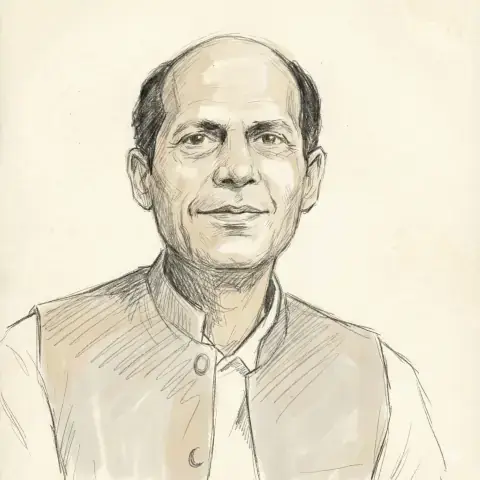
“The constitutional package is most likely to land in parliament in the first week of October,” Irfan Siddiqui, PML-N’s parliamentary leader in the Senate, told a group of reporters on Thursday.
However, Mr Siddiqui agreed that passing the amendments, especially in the Senate, would not be possible without the backing of JUI-F, led by Maulana Fazlur Rehman.
He said the coalition government was in contact with the JUI-F chief, who supported the concept of a constitutional court but wanted clarity on key issues such as the number of judges, the appointment procedure, tenure, retirement age and the service structure.
Mr Siddiqui said the structure of the proposed constitutional court would be federal in nature, with representation from all the provinces.
He recalled that the formation of a constitutional court had been agreed upon in the Charter of Democracy, signed in May 2006 between the former prime ministers Nawaz Sharif and Benazir Bhutto. The proposal, he said, was later endorsed by all key political leaders, including PTI founder Imran Khan.
As for the proposed changes in the procedure of judges’ appointments, he recalled that before the 18th Amendment, the chief justice of Pakistan and the provincial chief justices had a pivotal role in appointing judges.
The 18th Amendment, passed in 2010, aimed to restore a balance of power by introducing a two-tier process involving the Judicial Commission, headed by the chief justice, and an eight-member parliamentary committee with equal representation from the government and opposition.
However, he lamented that the passage of the 19th Amendment, pushed by the then chief justice Iftikhar Chaudhry, had effectively neutralised the role of parliament in the appointment process.
The parliament “unwillingly” passed the 19th Amendment, which in practice has paralysed the parliamentary committee’s role in judicial appointments, Mr Siddiqui said. He argued that the current proposal aimed to revert to the 18th Amendment, giving parliament a more meaningful role.
Responding to a question on reserved seats, Mr Siddiqui highlighted the ongoing tension between parliament and the judiciary.
He stressed that while the judiciary has the authority to interpret the law, it is unclear where an appeal can be made if the judiciary rules against the Constitution itself.
Referring to the Elections Act, Mr Siddiqui noted a recent amendment that has led to legal confusion. “What do we do when forced to choose between the Constitution and the judiciary?” he asked.
He referred to Article 239(5) of the Constitution, which states that no constitutional amendment can be challenged in any court, and Article 239(6), which clarifies that there are no limitations on parliament’s power to amend the Constitution.
Mr Siddiqui also cited the example of the United States, where parliament not only appoints judges but can also impeach and punish them for misconduct.
Published in Dawn, September 27th, 2024