0
0

DHAKA: Bangladesh’s army chief vowed to back the country’s interim government “come what may” to help it complete key reforms after the ouster of Prime Minister Sheikh Hasina, so that elections could be held within the next 18 months.
General Wakeruz Zaman and his troops stood aside in early August amid raging student-led protests against Hasina, sealing the fate of the veteran politician who resigned after 15 years in power and fled to neighbouring India.
In a rare media interview, Zaman said at his office on Monday that the interim administration led by Nobel laureate Muhammad Yunus had his full support and outlined a pathway to rid the military of political influence. “I will stand beside him. Come what may. So that he can accomplish his mission,” Zaman, bespectacled and dressed in military fatigues, said of Yunus.
Yunus has promised essential reforms in the judiciary, police and financial institutions, paving the way for free and fair elections in the country of 170 million people. Following the reforms, Zaman said a transition to democracy should be made between a year and a year-and-a-half, but underlined the need for patience. “If you ask me, then I will say that should be the time frame by which we should enter into a democratic process,” he said.
Bangladesh’s main two political parties, Hasina’s Awami League and its bitter rival Bangladesh Nationalist Party (BNP), had both previously called for elections to be held within three months of the interim government taking office in August.
The BNP’s secretary general, Mirza Fakhrul Islam Alamgir, said on Tuesday that the party would like elections to be held at the earliest opportunity. “I am not going to give any particular time period but I think the sooner the better,” he said. “We are ready for elections. Even if they are held tomorrow, we are ready.” Hasina’s son and adviser Sajeeb Wazed did not immediately respond to a request for comment.
Zaman said he meets Yunus every week and the two have “very good relations”, with the military supporting the government’s efforts to stabilise the country after a period of turmoil. “I’m sure that if we work together, there is no reason why we should fail,” he said.
More than 1,000 people were killed in clashes that began as a movement against public-sector job quotas in July but escalated into a wider anti-government uprising — the bloodiest period in the country’s independent history. Calm has returned to Dhaka, a densely packed metropolis that was at the heart of the rebellion, but some parts of the civil service are not yet properly functional.
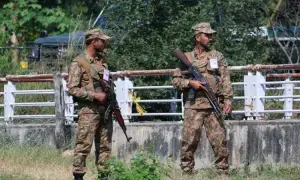
With much of Bangladesh’s police force, numbering around 190,000 personnel, still in disarray, the army has stepped up to carry out law and order duties nationwide.
Published in Dawn, September 25th, 2024