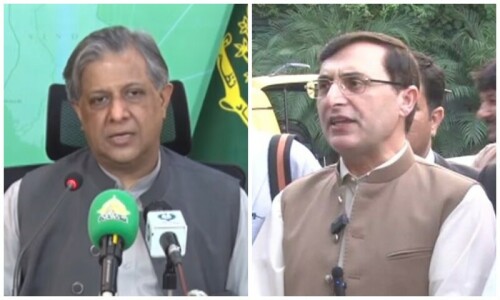
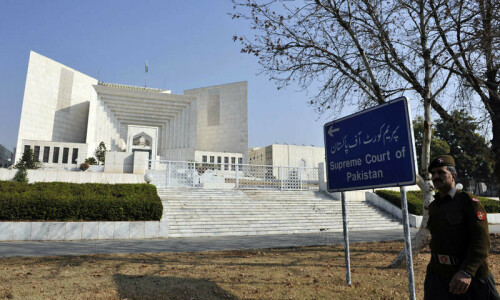
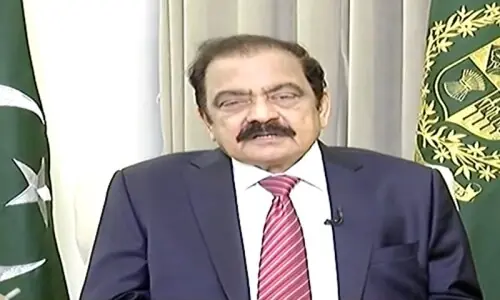
THE verdict is in. But does that make a difference? The Supreme Court’s detailed reasoning for its decision in the reserved seats case was finally made public on Monday, after weeks of clamouring for its release. However, the judgment, which carries the weight of a full court, was promptly rejected by the PML-N. The ruling party described it on X as “a political decision” issued by “eight specific judges in violation of their oath, to give political benefits to a party that spreads chaos and division”.
It seemed like a knee-jerk reaction to the 70 pages of meticulous reasoning for why 11 of the 13 judges who heard the case, including the chief justice of Pakistan, agreed that the PTI had been wronged by the ECP and deserved relief, and also why eight judges differed from the other three on what relief would be suitable.
The operative part of the judgment had, it may be recalled, been issued much earlier in July. After a first reading of the detailed reasoning, it is still difficult to understand why the ECP and government reacted so adversely to it from the get-go. The Supreme Court has, in fact, unanimously rejected two important arguments presented by the Sunni Ittehad Council and the PTI: ie, the SIC was entitled to reserved seats based on the strength of its parliamentary party despite not having directly won a seat, and that reserved seats could not be distributed to parties other than the SIC even if it was not to be given any.
In fact, the verdict makes clear that it was the ECP’s original sin — not allowing candidates to contest as PTI’s nominees, in violation of the Constitution and the law — that necessitated intervention and a prescription for rectification from the court.
The judgment explains that the court considered the dispute as being larger than just a disagreement between two parties, and that it acted to protect the rights of the electorate, not a particular political party. Based on that, the government’s position seems rather weak. Has it been risking contempt merely because the Supreme Court pointed out that the ECP did something wrong and instructed, as is its mandate, that justice be done? Moreover, how does the government morally justify its position considering that it is a direct beneficiary of the actions struck down as unlawful and unconstitutional by the court? Perhaps if this detailed verdict had been issued sooner, much of the controversy that has surrounded it may have been avoided. However, now that it is in hand, the government should either file for a review or accept it as is. Refusing to implement it is a dangerous strategy; it may unravel the entire edifice of the state.
Published in Dawn, September 24th, 2024