BEYOND sensational late-night arrests of opposition MNAs, impunity for abductors and unending intrigue, there is a remarkable degree of continuity and consistency in how the Pakistani ruling class rules.
Working people and ethnic peripheries are of secondary importance to all who occupy the corridors of power; their primary concern is to appease big creditors and foreign investors.
Which is why former finance minister Ishaq Dar’s unveiled dig at the IMF is somewhat amusing. Let’s be honest: all bourgeois parties seek only to secure a share of the piece in the debt-ridden, militarised structure of power, so much so that policymaking is akin to farce. Whoever is in the seat of government reproduces the same tired economic policy prescriptions. There is no bigger example of this than the privatisation mantra.
The present turbo-charged hybrid regime has followed the previous one in depicting privatisation of ‘sick’ state-owned enterprises as a panacea for our economic woes, an initiative, Mr Dar should be reminded, is entirely consistent with the IMF’s agenda.
The argument is simple: SOEs offer poor quality services while draining the public exchequer, so sell them off to the private sector and all will be well.
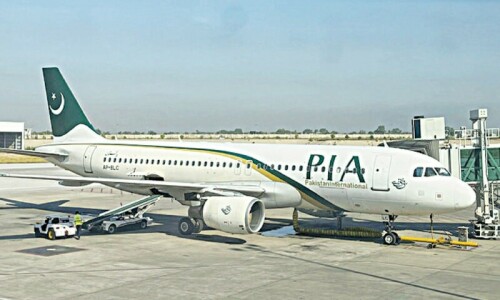
PIA is at the top of the chopping block. But there are many government departments either slated for sale or touted for a rechristening. Take PWD for example, which is to be abolished and replaced by a new infrastructure authority which will likely be a handmaiden of FWO. There are dozens of other public institutions that will, to use established policy-speak, be downsized or rightsized.
Privatising SOEs has been presented as a cure to our economic woes.
Let’s start with big fish like PIA. While airline travel is not the best example of truly public transport, it is nevertheless true that PIA used to offer highly subsidised fares to destinations like Gilgit and Gwadar.
Did this represent a burden on the public exchequer? It did, but then public services are not supposed to be subjected to the logic of profit-maximising capitalist firms. More generally, PIA’s performance and finances have not nosedived because it is state-owned; it can be argued that its financial plight is at least partially explained by the short-termism of the highly paid foreign consultants and executives hired over the past two decades precisely to fix the airline’s woes.
In the case of Pakistan Railways, financial woes are even easier to trace: until the 1980s, PR had a monopoly on freight traffic. In 1982, the National Logistics Cell was created, and a road-building frenzy was initiated that continues to this day. The NLC has now totally displaced PR in freight. The Railways’ passenger service was always subsidised by its cargo revenues.
Moving on to PTCL: when the enterprise was forcibly privatised under the Musharraf dictatorship, it was one of the most profitable enterprises in the country. In almost 20 years since, there has neither been a marked improvement in PTCL’s services, nor has its share value recovered to what it was in 2005. Arguably, the most notable fact is that it was sold to Etisalat, the UAE’s state-owned telecom company.
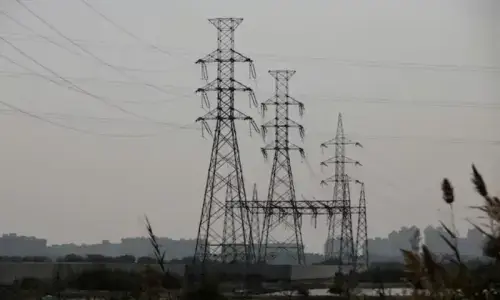
I could give more examples — of private sector IPPs that have run riot in the power sector, or local commercial banks that dole out cheap credit with reckless abandon, fuelling conspicuous consumption in cars and real estate, thus reinforcing jobless growth that accompanies the ‘privatise everything’ mantra loved by both our own economic czars and omnipotent creditors.
But I will save the last word for the long-suffering ethnic peripheries, where a hybrid privatisation of land, forest, water and minerals — a true enclosure of the commons — takes all manner of hybrid forms, depriving indigenous populations of even a modicum of the benefits of what our rulers call ‘development’.
Reko Diq, Saindak, Gwadar, Sindh’s coastal islands, Thar, the mountains of Gilgit-Baltistan, the Pakhtun tribal districts, Swat, Dir, Kohistan and so many more are literally up for grabs: the nexus of foreign firms, the establishment and local big men pillage at will, sometimes by signing formal contracts and at other times through sheer gangsterism.
The case of Reko Diq is astonishing — a reckless contract award to one multinational company resulted in a fine of $6 billion, only for the government to turn around and promise a concession for the mine to another multinational company.
They call it privatisation to make it sound like the state and private sector are somehow at odds. In fact, both are engaged in what Marx called primary accumulation, an inherently violent process that is becoming more brazen by the day. Neither our own ruling class nor its foreign patrons have any interest in taming the particularly exploitative and brutal nature of the beast that is Pakistani capitalism.
The writer teaches at Quaid-i-Azam University, Islamabad.
Published in Dawn, September 13th, 2024