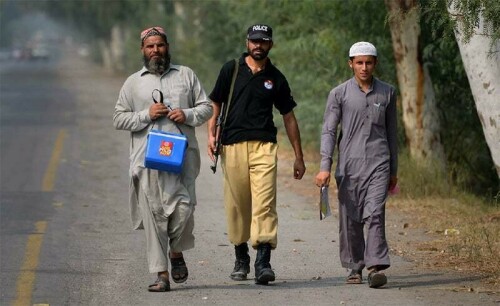
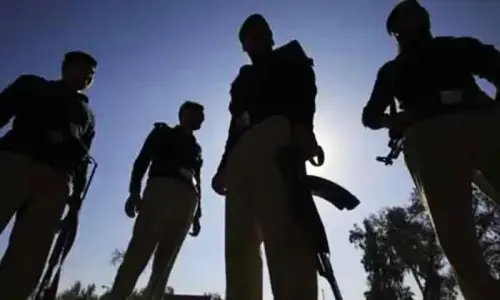
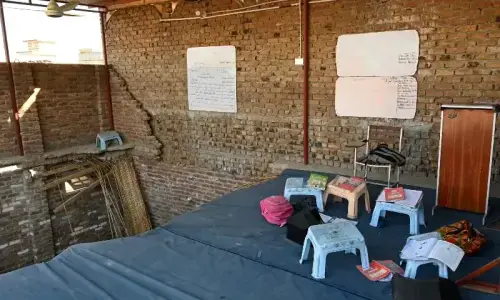
More than 100 police personnel who provide security for polio vaccination teams in Khyber Pakhtunkhwa’s Bannu district went on strike on Thursday after a string of deadly militant attacks this week.
Police officers who are routinely deployed to protect polio workers going door-to-door frequently come under attack by militants waging a war against security forces.
Hundreds of police and polio workers have been killed over the past decade.
“Any constable who learns of the protest is leaving their polio duty to join the demonstration,” said a police officer at the sit-in who asked not to be named.
He told AFP that negotiations have failed between the protesting police and senior officials in Bannu.
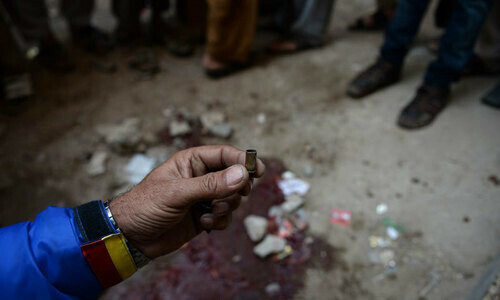
Since the launch of the latest vaccination drive on Monday, at least two police officers and one polio worker have been shot dead in separate attacks in rural districts near the border with Afghanistan, including one officer escorting a team on Thursday.
Nine people were also wounded on Monday in a bomb attack on a polio vaccination team claimed by the Islamic State (IS) group.
Most attacks are claimed by banned Tehreek-i-Taliban Pakistan (TTP).
In the latest attack, two motorcyclists opened fire on the police officer.
“The polio team was in a nearby street at the time, so they remained unharmed,” Ziauddin Ahmed, the district police officer, told AFP.
Polio and militancy surge
Pakistan has seen a surge in polio cases this year, recording 17 cases so far in 2024, compared to six in 2023.
Pakistan and Afghanistan are the only countries in the world where polio remains endemic despite an effective vaccine.
Health officials had aimed to vaccinate 30 million children in a week-long campaign.
“A partial polio campaign is underway here, but many police officials have abandoned their duties to join the sit-in,” another protesting police officer told AFP on condition of anonymity.
According to the United Nations children’s agency (Unicef), the number of polio cases has fallen dramatically from around 20,000 annually in the early 1990s.
Pockets of mountainous border regions, however, remain resistant to inoculation as a result of misinformation, conspiracy theories, and some firebrand clerics declaring it un-Islamic.
Pakistan has witnessed a surge in militant attacks since the Taliban government returned to power in neighbouring Afghanistan in 2021, mostly in KP, but also in Balochistan, which abuts Afghanistan and Iran.
Islamabad accuses Kabul’s rulers of failing to root out militants sheltering on Afghan soil as they prepare to stage assaults on Pakistan — a charge the Taliban government denies.