Pakistan’s consumer price index (CPI) in August rose 9.6 per cent year-on-year (YoY), marking a 34 month-low, data from the Pakistan Bureau of Statistics (PBS) showed on Monday.
The CPI measures household inflation and includes statistics about price change for categories of household expenditure.
“CPI general inflation increased to 9.6pc on year-on-year basis in August 2024 as compared to an increase of 11.1pc in the previous month and 27.4pc in August 2023,” PBS said.
The monthly inflation rate was 0.39pc, the PBS said.
According to Karachi-based brokerage firm, Topline Securities, the reading for August “is at 34 months low”.
“This takes 2MFY25 average inflation to 10.36pc compared to 27.84pc in 2MFY24,” it said in a comment.
The data showed that urban inflation increased by 11.7pc while rural inflation increased by 6.7pc in August.
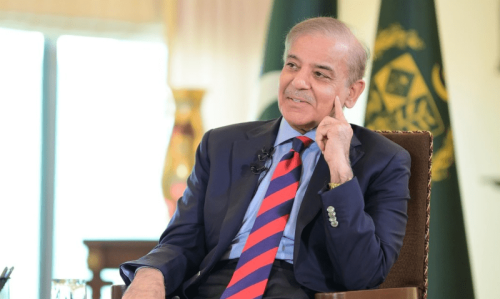
Prime Minister Shehbaz Sharif expressed satisfaction over the single-digit inflation rate, attributing the achievement to the hard work of the government’s economic team.
The prime minister noted that this decrease in inflation was a reflection of the government’s effective measures to improve the economy.
He credited the economic team for achieving the lowest inflation rate in the last three years, according to a press release issued by the Prime Minister’s Office.
The prime minister emphasised that his government saved the country from economic bankruptcy and put it on the path to stability and growth.
He reiterated his commitment to fulfilling his promise to the people to alleviate their suffering.
The prime minister noted that the positive results of the government’s economic reforms were now reaching the people, improving their lives and contributing to Pakistan’s development.
“Achieving Pakistan’s development goals is unattainable without improving the lives of ordinary people and ensuring economic prosperity,” PM Shehbaz concluded.
Speaking on the development in the National Assembly, Information Minister Attaullah Tarar said the decrease was the “proof of success” under the prime minister’s leadership.
He said inflation had reached the single digits due to the government’s measures.
In July, inflation had risen to 11.1pc on a YoY basis as compared to an increase of 12.6pc in the month of June and 28.3pc in July 2023. In May, it had hit 11.8pc — a 30-month low.
Earlier, Prime Minister Shehbaz Sharif had expressed satisfaction over a falling rate of inflation and improvements in other economic indicators.
The premier’s statement came after the Ministry of Finance said in its August outlook on Friday that inflation was expected to remain in the range of 9.5-10.5pc in August and further decline to 9-10pc in September “on account of stability in economic indicators”.
“After Fitch, the global rating agency, Moody’s recently upgraded Pakistan’s credit rating, which is an acknowledgement of the country’s positive economic indicators by the international financial institutions,” said PM Shehbaz.
Global rating agency Moody’s upgraded Pakistan’s local and foreign currency issuer and senior unsecured debt ratings to Caa2 from Caa3, saying its decision to upgrade was due to “Pakistan’s improving macroeconomic conditions and moderately better government liquidity and external positions, from very weak levels”.
Year-on-year
Urban: Food item prices that increased on a YoY basis included: Onions (136.32pc), Fresh Vegetables (76.35pc), Pulse Gram (42.35pc), Besan (31.15pc), Fish (28.98pc), Fresh Fruits (27.32pc), Pulse Moong (25.05pc) and Milk Powder (24.17pc).
Non-food items prices that increased: Gas Charges (318.74pc), Motor Vehicle Tax (168.79pc), Dental Services (28.84pc) and Cotton Cloth (24.17pc)
Rural: Food item prices that increased on a YoY basis included: Onions (144.27pc), Fresh Vegetables (57.31pc), Pulse Gram (39.19pc), Beans (30.52pc), Pulse Moong (29.46pc), Milk Powder (28.42pc), Butter (26.14pc), Fresh Fruits (25.11pc) and Fish (24.13pc).
Non-food items that increased: Motor Vehicle Tax (126.61pc), Woolen Readymade Garments (38.42pc), Education (22.95pc), Cotton Cloth (22.13pc) and Marriage Hall Charges (21.77pc).
Month-on-month
Urban: Food items that increased: Onions (22.84pc), Chicken (13.62pc), Eggs (12.39pc), Fresh Vegetables (12.25pc), Besan (4.88pc), Pulse Gram (4.55pc) and Gram Whole (3.82pc).
Non-food items prices that increased: Motor Vehicle Tax (168.79pc), Stationery (5.08pc), Hosiry (3.41pc) and Personal Effects n.e.c. (2.47pc).
Rural: Food items that increased: Chicken (19.69pc), Fresh Vegetables (18.67pc), Onions (17.72pc), Eggs (14.28pc), Pulse Gram (5.32pc) and Besan (4.44pc).
Non-food items that increased: Motor Vehicle Tax (126.61pc), Dental Services (3.24pc) and Stationery (2.55pc).