0
0

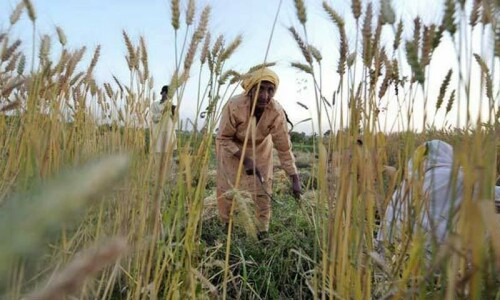
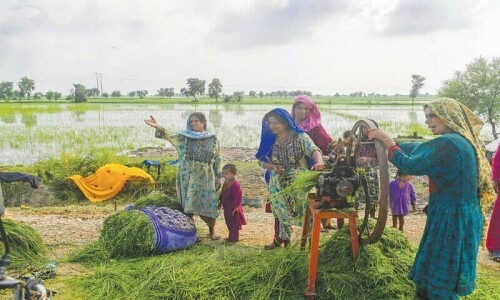
ISLAMABAD: The International Atomic Energy Agency (IAEA) and the Food and Agriculture Organisation (FAO) of the United Nations have trained farmers from Punjab and Sindh to employ nuclear-derived climate-smart agricultural practices to optimise rice productivity.
The perfect mix of combining chemical and organic fertilizer for local soil and crops, known as the ‘IAEA/FAO Integrated Option’ led to their basmati yield increasing by 188 per cent, while long grain rice increased by 17 per cent in field trials conducted in six regions of Sindh, Punjab and Khyber Pakhtunkhwa.
By increasing rice production, farmers enhance food supply and security in their region while promoting sustainable farming practices that can be replicated by other countries, according to details announced by IAEA on Friday.
Pakistani farmers were among the farmers in six Asian countries who received training on nuclear and isotopic techniques under the IAEA’s technical cooperation programme. Farmers from Bangladesh, Myanmar, Nepal, Pakistan and Vietnam saw particular success with rice production increased from 1 to 2.5 tonnes per hectare.
Farmers from Sindh, Punjab trained by IAEA, FAO experts
Groups of farmers in 11 countries across Asia have been using climate-smart agricultural practices following training on nuclear and isotopic techniques, under the IAEA’s technical cooperation programme.
Farmers from these six countries used nuclear derived climate smart agricultural practices and significantly increased their rice yields, with the help of IAEA and FAO to achieve sustainable rice production and food security in the region.
Rice is a food staple for 60 per cent of the Asian continent, with about 90pc of the global rice crop grown and consumed in Asia. Rice farming in the region uses over 135 million hectares and directly employs more than 300 million people in its cultivation and production. The shortages in water and the impacts of climate change have created a deficit in rice production. Increasing rice production in the region is important to ensure food security, meet the demands of a growing population and improve farmers’ livelihoods.
The IAEA says scientists from the Joint FAO/IAEA Centre of Nuclear Techniques in Food and Agriculture have made endeavours to harness nuclear techniques to optimise fertilizer and water use, thereby increasing the efficiency of agricultural production while maintaining soil health.
“The increase in productivity following the IAEA Integrated Option exemplifies how combining chemical and organic fertilisers can lead to higher yields and better soil health, paving the way for a future where food security and environmental sustainability co-exist harmoniously” said Javed Shah, a scientist at Nuclear Institute of Agriculture, Tandojam, Pakistan.
Climate-smart agriculture
“Nuclear science and technology play a key role in developing climate-smart agriculture,” said Mohammad Zaman, head of the Soil and Water Management and Crop Nutrition Section at the Joint FAO/IAEA Centre of Nuclear Techniques in Food and Agriculture.
“The result of the climate-smart rice production towards sustainability and regional food security through nuclear and modern technology demonstrates the potential of climate-smart agriculture practices in increasing rice productivity and promoting sustainable farming, which can be replicated worldwide,” he said.
In 2018, the Joint FAO/IAEA Centre developed the rice production guidelines, which provide farmers with the best management practices based on results obtained using isotopic techniques. By applying these enhanced crop management methods, farmers can improve the rice productivity and food security in their region.
The climate-smart rice production towards sustainability and regional food security through nuclear and modern technology project aims to develop climate-smart agriculture practices to combat climate change, mitigate greenhouse gas emissions, enhance soil fertility, and increase rice productivity in a sustainable manner.
The ‘Joint FAO/IAEA Centre of Nuclear Techniques in Food and Agriculture’ supports countries in applying nuclear and related techniques to increase agricultural productivity sustainably, adapt and build the resilience of agrifood systems to climate change, and reduce greenhouse gas emissions in agriculture, considering national and local specificities and priorities.
Published in Dawn, September 2nd, 2024