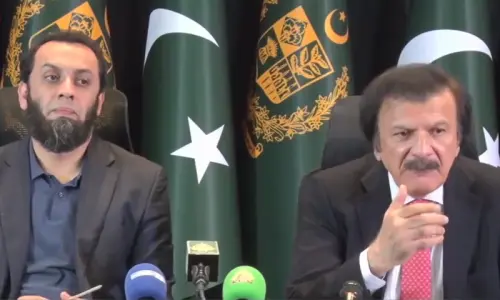
Pakistan and Bangladesh on Friday agreed that there was a need to work closely for the progress and prosperity of the people of both countries, the prime minister’s office said in a press release.
Pakistan’s government had earlier, through a statement on Aug 7, expressed solidarity with the people of Bangladesh after the fall of Hasina Wajid’s government amid widespread protests.
Hasina’s 15-year rule saw widespread human rights abuses, including the mass detention and extrajudicial killings of her political opponents.
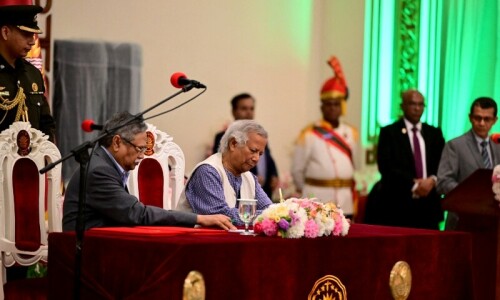
She was replaced by Nobel laureate Yunus, who is heading an interim government facing the monumental task of charting democratic reforms ahead of expected new elections.
Last week, Prime Minister (PM) Shehbaz Sharif reached out to the interim government of Bangladesh, extending an offer of aid to address the catastrophic impacts of recent flooding.
In a telephone conversation between the Chief Adviser of Bangladesh Muhammad Yunus and PM Shehbaz today, the two leaders agreed that greater regional cooperation could play a vital role in uplifting the lives of South Asian people.
“While congratulating him on his new role, lauded his contribution towards socio-economic development of his country and expressed my heartfelt sympathies over the devastating recent floods in Bangladesh,” the PM wrote on the X platform.
He expressed sympathies over the devastation caused by the recent floods in Bangladesh, the statement from his office added.
The prime minister underscored the importance of revitalising bilateral relations through enhanced cooperation in different domains.
Noting the historical, religious, and cultural bonds between Pakistan and Bangladesh, the prime minister also expressed a keen desire to boost commercial relations, cultural exchanges, and people-to-people contacts.
Relations between Pakistan and Bangladesh largely remained strained during Hasina Wajid’s tenure, marked by historical grievances stemming from the 1971 war. Additionally, the punishments meted out to figures associated with that period by her government have been a continuous source of tension.
The change in Dhaka is being seen as an opportunity for Pakistan to reengage with the important South Asian country.