0
0

ISLAMABAD: For the third consecutive fortnight, the prices of major petroleum products — petrol and high-speed diesel (HSD) — are estimated to drop by around Rs5-6 per litre mainly because of the lower international market for the next fortnight starting September 1.
Informed sources said the prices of petrol and HSD had decreased in the international market by $2 to $2.30 per barrel in the last fortnight. Depending on the final exchange rate calculation and existing tax rates, the prices of both petrol and HSD are projected to come down by Rs5 to 5.50 per litre.
Officials said the average price of petrol had dropped in the international market to about $80.40 per barrel from about $82.50 per barrel. Over the last fortnight, HSD declined to about $88 per barrel from $90.30.
During the current fortnight, the import premium on petrol dropped by about 50 cents per barrel to $8.50 while that on HSD remained unchanged at $5 per barrel. On the other hand, the local currency gained value against the US dollar by 25 cents during the fortnight.
The ex-depot petrol price currently stands at Rs260.96 per litre and HSD at Rs266.07 per litre. In the last pricing review, effective August 14, the government reduced the petrol and HSD prices by Rs8.47 and Rs6.70 per litre, respectively.
Thus, the total reduction in petrol and HSD prices in the last two fortnights amounted to Rs14.64 and Rs17.56 per litre, respectively, including Rs6.17 and Rs10.86 per litre on July 31.
The petrol and HSD prices increased Rs17.44 and Rs15.74 per litre in the first fortnight of July. Between May 1 and June 15, the prices of both petrol and HSD were reduced by about Rs35 and Rs22 per litre.
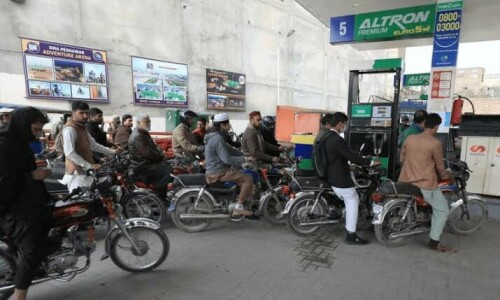
Petrol is mainly used in private transport, small vehicles, rickshaws, and two-wheelers, and it directly affects the budget of the middle and lower middle classes.
On the other hand, most of the transport sector runs on HSD. Its price is considered inflationary as it is mainly used in heavy transport vehicles, trains and agricultural engines like trucks, buses, tractors, tube wells and threshers and particularly impacts the prices of vegetables and other eatables.
The drop in petroleum prices is seldom reflected in fares and prices of essential commodities.
The government has jacked up the maximum limit of petroleum levy to Rs70 per litre in the finance bill to collect Rs1.28 trillion in the next fiscal year against Rs1.019tr collection during the last fiscal year, almost Rs150bn higher than the Rs869bn budget target.
Currently, the government is charging about Rs78 per litre tax on petrol and HSD. Although the general sales tax (GST) is zero on all petroleum products, the government charges Rs60 per litre PDL on both products, which usually impacts the masses.
The government also charges about Rs18 per litre custom duty on petrol and HSD, irrespective of their local production or imports. In addition, about Rs17 per litre distribution and sale margins are going to oil companies and their dealers.
On the other hand, it charges Rs50 per litre on light diesel and high octane blending components and 95RON petrol used by the wealthy in luxury imported vehicles.
Published in Dawn, August 24th, 2024