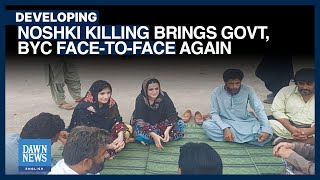
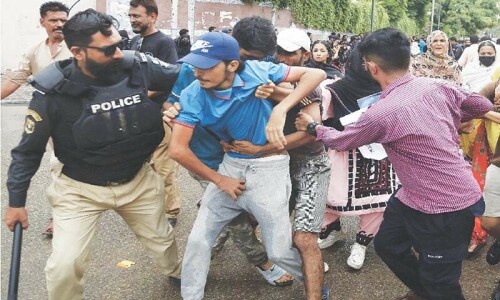
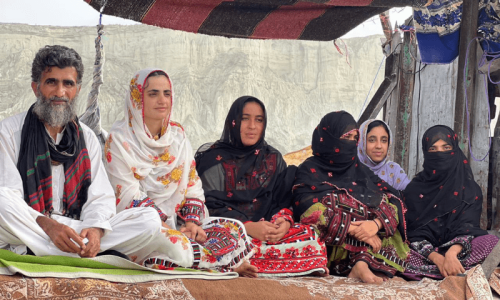
GWADAR / QUETTA: Baloch Yakjehti Committee (BYC) leaders have demanded FIRs against security personnel who allegedly opened fire on the protesters in Gwadar and Noshki, killing four people and injuring six others.
A senior official of the Home Department in Quetta told Dawn that the protesting BYC leaders have put the fresh demands before the government committee, which is holding a second round of talks with them.
According to Home Department officials, the second round of negotiations between the BYC leadership and the government team, led by Senior Minister Zahoor Ahmed Buledi, reviewed the implementation of the previous agreement reached between the two sides.
National Party senior leader Hussain Ashraf and MPA from Gwadar, Maulana Hidayatur Rehman Baloch and other leaders were also part of the team negotiating with BYC leaders Dr Mahrang Baloch and Sami Deen.
Mr Buledi, the provincial minister for planning and development, informed the BYC leadership that the majority of its arrested supporters have already been released.
The legal process is underway to free the remaining people against whom FIR have been registered.
Sources said the BYC leadership was insisting on the release of all arrested people and the withdrawal of cases registered against them.
An official also told Dawn that the issue of FIRs registered against BYC supporters and workers was yet to be decided as it can only be settled after the completion of the judicial process.
Despite the second round of talks with the government, hundreds of BYC supporters and workers were still protesting in different areas of the province on Monday.
BYC leader Bebang Baloch also confirmed the ongoing talks and said that sit-ins and road blocks are continuing in Gwadar, Quetta, Turbat, Hub and Noshki as the central BYC leadership has yet to announce the end of sit-ins.
He said telephone services had been restored in parts of Gwadar, while the internet and WhatsApp were not fully restored.
Meanwhile, normalcy was returning in Gwadar, Turbat and other areas after over a week of protests and road blocks created acute shortage of daily use items and petrol.
Even though markets and businesses have been opened, the shortage of petrol and diesel continued in Quetta and many other towns as supply has still not reached due to road blocks.
Iranian petrol was also not arriving in the border areas as the Quetta-Taftan Highway and other roads were still closed.
Published in Dawn, August 6th, 2024