108 killed after landslides strike India tea estates



Landslides in India triggered by pounding monsoon rains struck tea plantations and killed at least 108 people on Tuesday, with at least 250 others rescued from mud and debris, officials said.
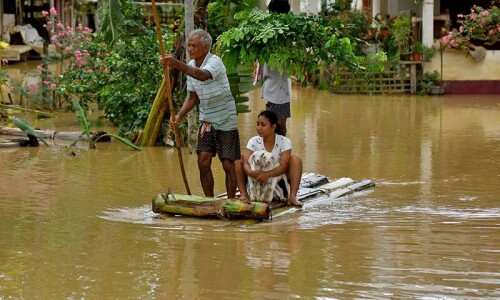
The southern coastal state of Kerala has been battered by torrential downpours, with blocked roads into the disaster area in Wayanad district complicating relief efforts.
“This catastrophe has resulted in the loss of 108 lives,” the state’s chief minister Pinarayi Vijayan said in a statement. “This is one of the worst natural calamities Kerala has ever witnessed.”
Another 128 people had been hospitalised for treatment after their rescue, he said.
“This is one of the worst natural calamities that our state has seen.”
“My thoughts are with all those who have lost their loved ones and prayers with those injured,” Prime Minister Narendra Modi said in a post on social media platform X.
Wayanad is famed for the tea estates that crisscross its hilly countryside and which rely on a large pool of casual labourers for planting and harvest.
Several estates in the district were hit by two successive landslides before dawn when most of their inhabitants were asleep.
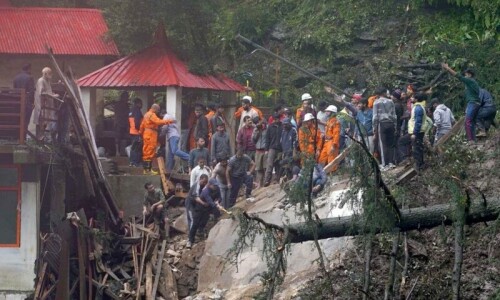
Images published by the National Disaster Response Force showed rescue crews trudging through mud to search for survivors and carry bodies on stretchers out of the area.
Homes were caked with brown sludge as the force of the landslide scattered cars, corrugated iron and other debris around the disaster site.
India’s army said it had deployed more than 200 soldiers to the area to assist state security forces and fire crews in search-and-rescue efforts.
Kerala state excise minister MB Rajesh said more than 250 people had been rescued so far, The Hindu newspaper reported.
Modi’s office said families of victims would receive a compensation payment of $2,400.
More rainfall and strong winds were forecast in Kerala on Tuesday, the state’s disaster management agency said.
‘Alarming rise in landslides’
Indian opposition leader Rahul Gandhi, who until recently represented Wayanad in parliament, told lawmakers that the scope of the devastation was “heartbreaking”.
“Our country has witnessed an alarming rise in landslides in recent years,” he said. “The need of the hour is a comprehensive action plan to address the growing frequency of natural calamities.”
Monsoon rains across the region from June to September offer respite from the summer heat and are crucial to replenishing water supplies.
They are vital for agriculture and therefore the livelihoods of millions of farmers and food security for South Asia’s nearly two billion people.
But they also bring destruction in the form of landslides and floods.
The number of fatal floods and landslides has increased in recent years, and experts say climate change is exacerbating the problem.
“The number of extremely heavy rainfall days have increased,” Kartiki Negi of Indian environment think tank Climate Trends told AFP.
“The atmosphere is quite disturbed,” she said. “Thus we see more and more extreme events these days.”
Damming, deforestation and development projects in India have also exacerbated the human toll.
Intense monsoon storms battered India this month, flooding parts of the financial capital Mumbai, while lightning in the eastern state of Bihar killed at least 10 people.
Nearly 500 people were killed around Kerala in 2018 during the worst flooding to hit the state in almost a century.
India’s worst landslide in recent decades was in 1998, when rockfalls triggered by heavy monsoon rains killed at least 220 people and buried the tiny village of Malpa in the Himalayas.