0
0


A GROUP of scientists say they have found new evidence to back up their theory that complex life on Earth may have begun 1.5 billion years earlier than thought, BBC News reported.
The team, working in Gabon, say they discovered evidence deep within rocks showing environmental conditions for animal life 2.1 billion years ago. But they say the organisms were restricted to an inland sea, did not spread globally and eventually died out.
The ideas are a big departure from conventional thinking and not all scientists agree. Most experts believe animal life began around 635 million years ago.
Professor Ernest Chi Fru at Cardiff University worked with an international team of scientists, told BBC that, if his theory is correct, these life forms would have been similar to slime mould — a brainless single-cell organism that reproduces with spores. But Professor Graham Shields at University College London, who was not involved in the research, said he had some reservations.
“I’m not against the idea that there were higher nutrients 2.1 billion years ago but I’m not convinced that this could lead to diversification to form complex life,” he said, suggesting more evidence was needed.
Prof Chi Fru said his work helped prove ideas about the processes that create life on Earth.
“We’re saying, look, there’s fossils here, there’s oxygen, it’s stimulated the appearance of the first complex living organisms,” he said.
‘Evolution’
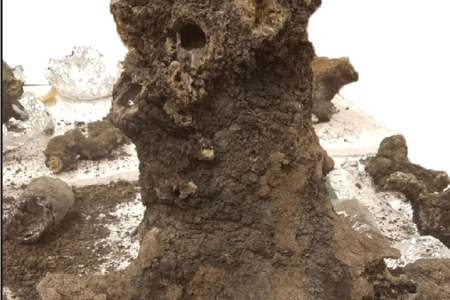
The first hint that complex life could have begun earlier than previously thought came about 10 years ago with the discovery of something called the Francevillian formation, BBC News reported.
Prof Chi Fru and his colleagues have now analysed sediment cores drilled from the rock in Gabon.
The chemistry of the rock showed evidence that a “laboratory” for life was created just before the formation appeared.
They believe that the high levels of oxygen and phosphorus were made by two continental plates colliding under water, creating volcanic activity.
Published in Dawn, July 30th, 2024