0
0

ISLAMABAD, March 25: Prime Minister Shaukat Aziz said on Saturday that the elected assemblies would complete their constitutional term for the first time in the country’s history.
Speaking at the annual lunch of the Lahore Chamber of Commerce and Industry (LCCI), Mr Aziz said economic growth, investment and business targets could not be achieved without political stability, strong defence and efficient management of economy in the country.
He said Pakistan had gained enough political stability to become a hub for national and international investment and that it was going to achieve a landmark $3 billion foreign investment this year.
He said the policy of deregulation, privatisation and liberalisation had put the country’s economic activity on the right track and it was to achieve between 6 and 8 per cent annual growth rate per annum over the next three years.
The premier said there was a transition process across the globe and if the country failed to grab this opportunity, it would lag further behind in development and progress.
He claimed that the country’s economy had been transformed in the last six years of reforms, as a result of which Pakistan was rated one of the top 10 economically-strong countries of the world.
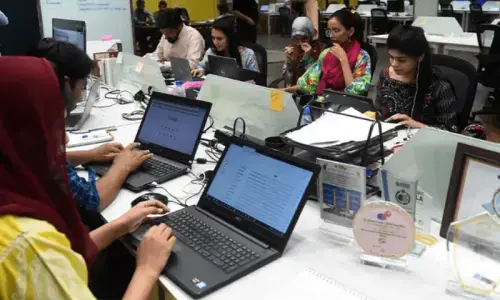
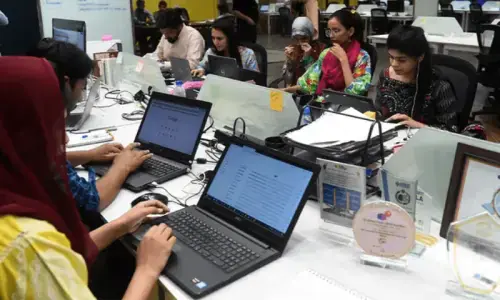
Pakistan, he said, was embarking upon its human capital development and had to provide maximum skill training to its human resources.
Citing political instability as the biggest weakness of the country, he said it could jeopardise its march on the road to progress.
He said the completion of parliamentary term was a big achievement in the presence of a vibrant and hostile opposition, which, besides criticising government policies, put forward healthy proposals for the betterment of the country.
He mentioned the independence of print and electronic media, which, he said, had helped in growth of electronic media during the present regime.
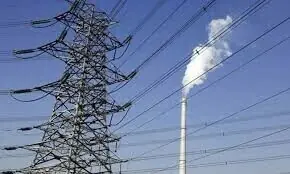
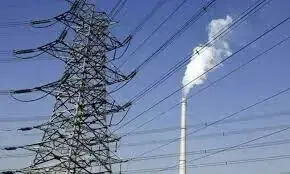
About the demands for reducing electricity and gas prices, he said Pakistan had already lower utility rates as compared to many neighbouring countries.
He stressed on competitiveness in the production of goods to face the World Trade Organisation challenges and to keep the country’s industrial growth at the optimum level.
He claimed that poverty had been reduced as a recent independent survey had shown and transparency in our privatization policy had also paid dividends.
With regard to the price hike, he said there was no magic formula to buy petroleum at $60 per barrel and sell it at $30 a barrel.
About sugar, he said the number of sale points for the commodity had been increased up to 1,100 from where every poor could get sugar to meet his household needs.
The prime minister called upon the chambers of commerce and industry to, instead of involving themselves in politics and groupings, unite and help develop business and industry.
He asked chambers to concentrate their energies on continuous research and feedback to the government on bringing suitable improvements in its economic and trade policies.