Ideologues compete in Iran presidential poll


TEHRAN: Iranians voted on Friday in a presidential election runoff between a reformist advocating improved ties with the West and an ultraconservative former nuclear negotiator.
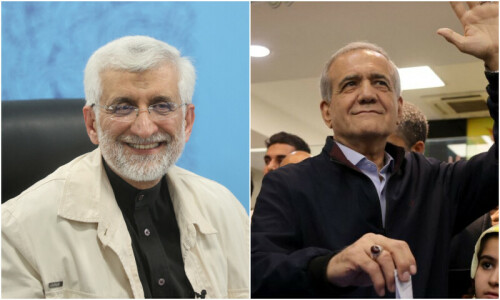
The runoff between reformist Dr Masoud Pezeshkian and ultraconservative Saeed Jalili comes amid heightened regional tensions over the Gaza war, Iran’s nuclear standoff with the West and widespread economic discontent exacerbated by Western sanctions.
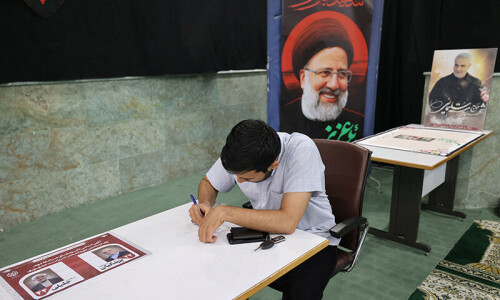
The election, called early after the death of ultraconservative president Ebrahim Raisi in a helicopter crash, follows a first round marked by a low turnout.
However, when supreme leader Ayatollah Ali Khamenei cast his ballot as polls opened, he noted, “I heard that the enthusiasm and interest of the people is more than before, praise to God that it will be like this, and if it is like this, it will be gratifying.”
Polling time extended by two hours after low turnout in the first round
In last week’s first round, Pezeshkian, who was the only reformist permitted to stand, won the largest number of votes, around 42 per cent, while Jalili came second with 39pc, according to figures from Iran’s elections authority.
Only 40pc of Iran’s 61 million eligible voters took part — the lowest turnout in any presidential election since the Islamic Revolution of 1979.
Low turnout
Emphasising the importance of the election, Khamenei called for a higher turnout in the runoff. He said the first round turnout was lower than expected, but added that it was not an act “against the system”.
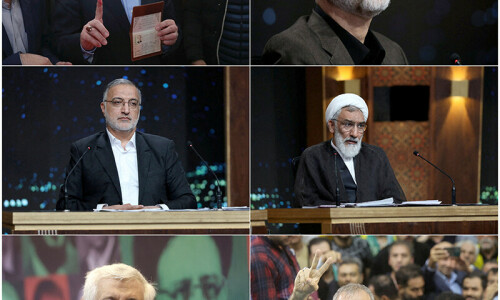
Pezeshkian and Jalili have taken part in two televised debates during which they discussed the low turnout, as well as economic woes, international relations and internet restrictions. He also vowed to “fully” oppose police patrols enforcing the mandatory headscarf for women, a high-profile issue since the death in police custody in 2022 of Iranian Kurd Mahsa Amini, 22, who had been detained for an alleged breach of the dress code.
Jalili, noted for his uncompromising anti-Western position, mobilised a substantial base of hardline support and received backing from other ultraconservative candidates.
While campaigning, the 58-year-old criticised moderates for having signed the 2015 deal which promised Iran sanctions relief in return for curbs on its nuclear programme. Jalili said the accord, which the US withdrew from in 2018 under then-president Donald Trump, “did not benefit Iran at all”.
Published in Dawn, July 6th, 2024