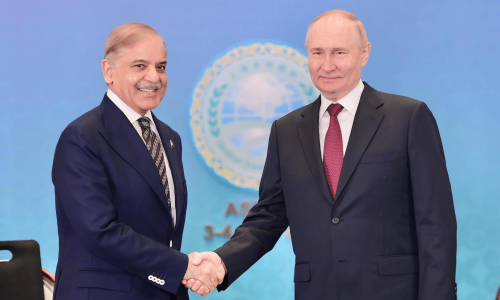
AT their meeting on the side-lines of the Shanghai Cooperation Organisation-Plus summit in Astana, Kazakhstan, Prime Minister Shehbaz Sharif and Russian President Vladimir Putin agreed to improve bilateral trade ties.
They discussed the issues impeding financial and banking connectivity for easing bilateral trade flows as Mr Sharif called for reviving and expanding trade under a barter system. Mr Putin responded positively, saying that ties between Moscow and Islamabad had recovered in recent years due to improvement in trade linkages. He was hopeful that both Russia and Pakistan would enhance their energy and agriculture cooperation.
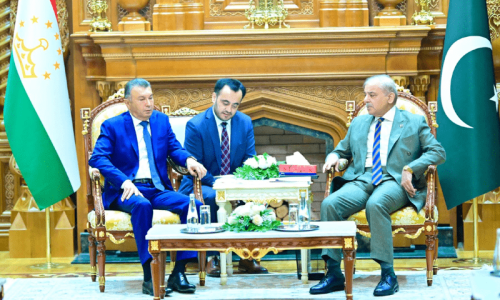
Mr Sharif also used his visit to renew calls for strengthening Pakistan’s trade and economic cooperation with the Central Asian states, asking their leaders to establish road and rail connectivity and offering them transit rights through this country to trade with the rest of the world via the Karachi port.
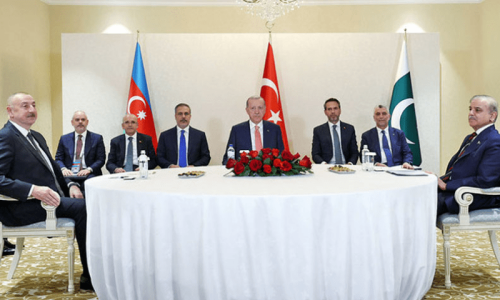
Speaking at the inaugural session of the trilateral summit of Pakistan, Turkiye and Azerbaijan, he proposed tripartite institutional mechanisms to strengthen commercial ties. He also mentioned plans to host a regional connectivity summit to provide trade corridors to Central Asia.
While rail and road connectivity with Central Asia is a long shot, Mr Sharif’s meetings with regional leaders indicate his desire to end Pakistan’s growing trade isolation by integrating the national economy with that of other countries in the region.
That Pakistan remains the least integrated economy regionally, in spite of its geographical advantage and potential to become what Mr Sharif calls an “ideal trade conduit” in the region speaks volumes about our policymakers’ ‘trade isolationist’ mindset.
In fact, Islamabad is not part of any effective regional trading bloc. The two regional economic blocs Pakistan is a part of — the Economic Cooperation Organisation and the South Asian Free Trade Area — have been dormant since their formation. While other members of these blocs have significantly boosted economic cooperation, our share of trade with ECO and the South Asian nations is negligible. Out of the four countries Pakistan has borders with, it is only with China with which we have significant trading linkages. With the other three — India, Iran and Afghanistan, our trade position is dismal.
Several factors have impeded Pakistan’s economic integration within the region but political and territorial disputes with neighbouring countries, imagined and real security concerns, a narrow band of exportable products, and reliance on the West for both trade and aid are among the main reasons for our continued economic isolation.
Trading blocs have helped their respective member states become competitive and have contributed greatly to their economic development. Will Mr Sharif be able to translate his dream of integrating Pakistan within the region by liberalising trade cooperation with South and Central Asia? That remains to be seen.
Published in Dawn, July 5th, 2024