0
0

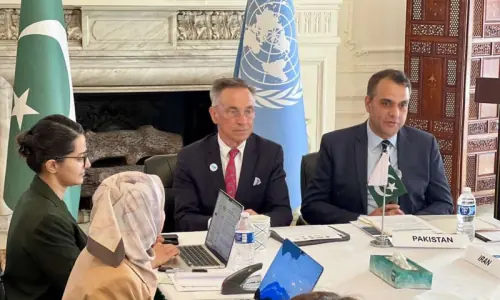
NONE of the limited choices before the international community where dealing with the Afghan Taliban regime are very good ones. For example, it would not be advisable for foreign countries to fully embrace the Taliban before securing commitments from them regarding inclusivity and lifting of curbs that stand in the way of women’s education and participation in public life. On the other hand, it would be unwise for the world to isolate Afghanistan and leave millions of ordinary Afghans in the lurch. It should be remembered that the last time the comity of nations refused to engage with the Taliban, the hard-line outfit moved even closer to Al Qaeda. Therefore, the most feasible course at this point appears to be limited engagement with the Taliban, while continuing to apply pressure upon Afghanistan’s de facto rulers to lift their stringent curbs on women’s freedom. The international community seems to have realised the practicality of the aforementioned course, which is why Taliban representatives were invited to recent UN-backed discussions in Doha about the future of Afghanistan. Taliban spokesman Zabihullah Mujahid, who led the Afghan delegation, did not mention girls’ education or human rights, but was keen to court foreign support for his country, and called for lifting sanctions on Afghanistan.
While the Taliban’s track record on human rights is abysmal, and the international community should not legitimise the group’s misogyny, a more realistic view of the issue is needed. As per the UN, 23.7m people in Afghanistan are in need, and the country continues to suffer from “entrenched poverty”. It is evident then that ordinary Afghans should not be punished for the Taliban’s medieval worldview. Cutting off Afghanistan from the global financial system, and preventing states from trading with it, will only add to the population’s misery. Therefore, engagement with the Taliban should continue, with the message that full international recognition can only come when girls are allowed unobstructed access to education, and women participation in public life. Moreover, no terrorist outfits can be allowed to use Afghan soil to attack other countries. As this process continues, Afghans in need should be able to access international humanitarian aid. Moreover, Muslim states, including Saudi Arabia and Pakistan, should make more effort to convince the Taliban leadership that educating girls does not violate religious norms.
Published in Dawn, July 2nd, 2024