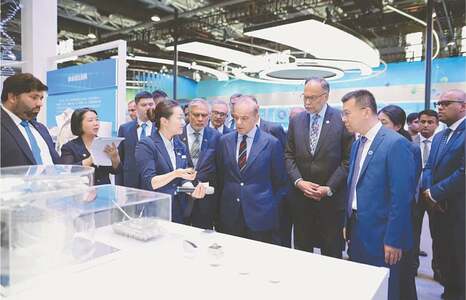
THE optics from Shehbaz Sharif’s China trip appear to be positive. The highlight of the visit came on Friday, when the prime minister met China’s top brass, including President Xi Jinping and Premier Li Qiang.
In other engagements, Mr Sharif and his delegation, including top ministers, networked with Chinese investors and officials. The meeting with Mr Xi was warm, as China’s leader extolled the virtues of the bilateral relationship, and promised to “build a closer China-Pakistan community”.
As for concrete takeaways, there were pledges to revive CPEC, with Xi Jinping saying Beijing was willing to create an “upgraded version” of the corridor, while at least 32 MoUs were signed, covering various sectors such as transport, infrastructure, agriculture, etc.
While both the Pakistani and Chinese sides were effusive in their praise for the bilateral relationship, concerns regarding security were communicated by the highest echelons of the state. President Xi hoped that Pakistan would “effectively guarantee the safety of Chinese personnel”, while Premier Li echoed similar concerns.
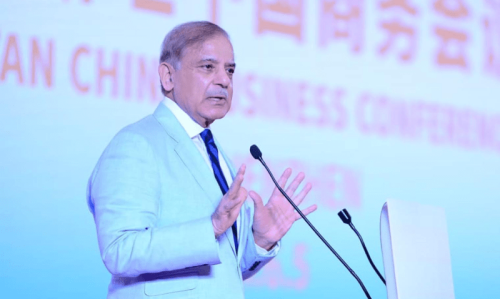
Such messaging was expected from Beijing, especially after five Chinese workers were killed in the Dasu terrorist attack earlier this year. For his part, Mr Sharif extended his condolences over the loss of life, and promised that Pakistan would do all it could to protect Chinese personnel and interests. Mr Sharif also promised Chinese investors in Shenzhen that the state had zero tolerance for corruption.
From the PM’s interactions, it is clear that China will stand by Pakistan and is committed to deepening ties, but that Pakistan will have to deliver on promises of fool-proof security, and crack down on corruption. China is perhaps Pakistan’s closest bilateral partner, along with Saudi Arabia, and maintaining this relationship is essential to the country’s geo-economic and geopolitical interests. Attracting new Chinese investment, and launching the ‘second phase’ of CPEC, can play a key role in getting Pakistan out of the dire financial straits it finds itself in currently.
But it is clear that the state will have to work overtime to ensure that the new CPEC projects, as well as the multiple MoUs signed in Beijing, are translated into reality. It should be remembered that following his recent trips to Saudi Arabia and the UAE, the PM returned with pledges of billions of dollars in investments. Most of those pledges — if not all — have yet to materialise.
Perhaps the issue is that whether it is our friends in the Gulf or our partners in China, Pakistan’s foreign allies want to see internal political stability, a commitment to financial transparency and fiscal responsibility, as well as a secure environment free of terrorism before they commit their funds. This is perhaps the biggest obstacle that confronts the state in attracting foreign investment.
Published in Dawn, June 9th, 2024