ALTHOUGH dealing with the presence of terrorist groups in Afghanistan is a major political, security and strategic challenge for Pakistan, leaving the problem unattended is not advisable, as terrorist outfits will continue their bloody campaign in this country unless they are firmly confronted.
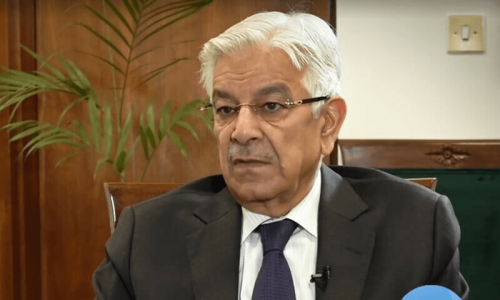
It is clear that going after militant groups inside Afghanistan unilaterally presents its own set of difficulties and risks a further deterioration in ties with the ruling Afghan Taliban, and the loss of whatever leverage Pakistan may have with them. In this regard, the defence minister’s recent comments reflect the state’s frustration with the Afghan Taliban. Taking to X, Khawaja Asif termed Afghanistan “the source of terrorism” in Pakistan, adding that counterterrorism “cooperation from Kabul … is not available”.
Pakistan has few good options at the moment. However, the use of diplomatic channels with Afghanistan should not be abandoned, while the state should make it plain that all militant groups wreaking havoc inside this country will be dealt with decisively. Though the Afghan Taliban consistently deny their soil is being used by terrorists, the international community is quite clear that militants are active inside Afghanistan.
At a briefing of the UN Security Council earlier this month, the secretary general’s special representative for Afghanistan observed that the country “has long been the source of instability and terrorism”, and noted that “there are well-founded concerns over the presence of terrorist groups” inside Afghanistan, including IS and TTP.
Pakistan has made these very same arguments before the world. Furthermore, in some media reports Taliban officials have admitted there are “places that might be out of our control” on the border area with Pakistan. If they want global legitimacy, then the Taliban must establish order over these ‘out of control’ areas, and the international community, including Afghanistan’s neighbours, should be willing to help Kabul’s counterterrorism effort.
Yet it is also true that the Afghan Taliban and the TTP are of the same ideological stock, so expecting the former to crush the latter is naïve. What the Taliban can, indeed must, do is to ensure that the TTP does not harm Pakistan. If Kabul’s rulers fail on this count, then there will be genuine reason to believe they are tacitly supporting the TTP’s terrorist activities.
As has been written in these columns earlier, along with bilateral engagement, all of Afghanistan’s neighbours — particularly Pakistan, Iran, China, the Central Asian states and Russia — must coordinate their policies regarding militant groups in Afghanistan.
That way the Taliban will get the same message from all capitals, and hopefully, not repeat the mistakes they made in 2001. China, for example, has emphasised “patient communication with Afghan authorities”. This may be easier than the other limited options before Pakistan and Afghanistan’s other neighbours.
Published in Dawn, March 29th, 2024