Sindh Nari Day calls for increased representation of women in parliament


 0
0
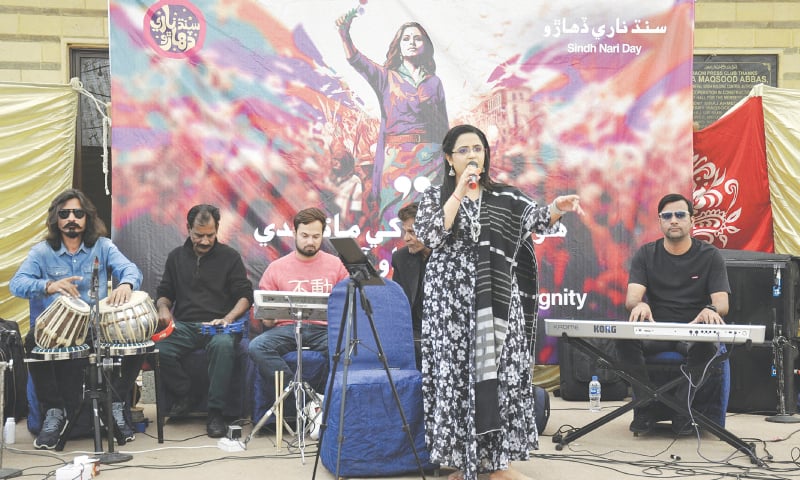

KARACHI: Speakers at a Women’s Day programme on Sunday demanded that the number of seats reserved in assemblies for women be increased from 17 per cent to 33pc and parties give electoral tickets to at least 20pc women to contest elections on general seats.
The demands were made at the first Sindh Nari Day organised at the Karachi Press Club. A large number of women, including students of various universities in Karachi and Hyderabad, attended the event.
Speaking on the occasion, former chairperson of Sindh Commission on the Status of Women Nuzhat Shirin said several institutions had been established for the rights of women but they were facing ‘financial and human resource problems.’
She added that laws had been enacted in ‘haste’ and even those were not being implemented properly whereas shelters homes had been set up but, they too, were facing a host of issues. Thus, she called for developing an ‘advocacy strategy’ to deal with those problems.
Achievements of women and challenges highlighted at the event
Anis Memon talked about women who had achieved milestones in politics and government affairs in Sindh.
She also talked about the tragic incidents women had to face in the province and cited the case of Fatima Phurio — a young girl who was found dead under mysterious circumstances at haveli in Khairpur — and other incidents and urged women to launch a joint struggle against oppression.
Aisha Gazdar, a researcher and film-maker, recalled that while making a film on honour killing in Shahdadkot around 10 years ago, she and her film crew were ‘disturbed’ to see the attitude of the then judge while filming the case of a woman victim of honour killing inside a court. She said although the judge had an urban background, but his mentality was like many others in society.
Dr Sorath Sindhu, an oncologist and activist, shared her experience with flood victims in Sindh and said that she had formed social media teams in villages to particularly help the affected women. She added that social media has become a powerful source of activism and suggested establishing social media platforms for mobilising women and sensitising people about their issues.
Pushpa Kumari said there was a need to uplift minorities in the mainstream politics and land reforms were needed to improve the condition of women in rural areas. She regretted that even today, women travelled up to 10 kilometres to get drinking water in Thar.
Actress Bakhtawar Mazhar urged women to join theatre as there was nothing wrong to express oneself in that field.
Waheeda Mahesar of Szabist, who is said to have established over one dozen technical institutes of training, said students tended to study something else while the market demanded something else and so there was no link between academic institutes and the industries, which resulted in unemployment.
Fehmida Riaz, freelance journalist and researcher, said despite tribalism and oppressive traditions, women of Sindh had achieved milestones in different fields like sports, law, media and health sectors from Karachi to Kashmore.
Women take tech, sports routes to empowerment
One of the inspiring sessions of the day about success stories of women in different fields, where some women also who shared their experiences.
Mehreen Baloch from Lyari talked about her boxing career. She said when she chose to join boxing, she faced problems but she took them as a challenge and won four gold medals in boxing and even represented Pakistan in Commonwealth Games.
Najma Maheshwari recalled that her mother was the first woman in the Maheshwari community in Thar who joined politics in the 1980s.
Viroonh Pirzado said after doing masters in 2018, she became a sports teacher in a school and established a forum/organisation for women’s sports in 2023. She said she was planning to launch a training programme for women for football sports at basic level in each district of Sindh to encourage women to come into the field of sports.
Natasha from Hyderabad who is a differently able girl said she faced various problems as there was no place for people on wheel-chair in most educational institutes. She recalled that when she passed commission exam for a job, she saw that there were 52 boys on wheelchairs and she was the only girl. She said she planned to set up an organisation for differently-able persons to make them financially strong.
Earlier, organisers of the Sindh Nari Day, Shazia Nizamani, President Sindh Women Lawyers Association Prof Dr Shehnila Zardari of NED University, journalist Fehmida Riaz, and lawyer Rubina, also spoke and informed the audience about their manifesto.
They said they wanted gender-inclusive budgeting in all development projects, effective implementation of women’s quotas in political party structures, leadership positions in the all sectors, written contract of women working in the media with job security, equal pay and establishment of anti-sexual harassment committees in media houses. They also demanded effective implementation of 14 provincial and federal laws in Sindh.
Dr Sahar Shah Hussaini recited her poetry on this occasion and at the end of the programme, students presented sufi songs and recited poetry highlighting discrimination against women. Dance and other performances also took place.
Published in Dawn, March 11th, 2024