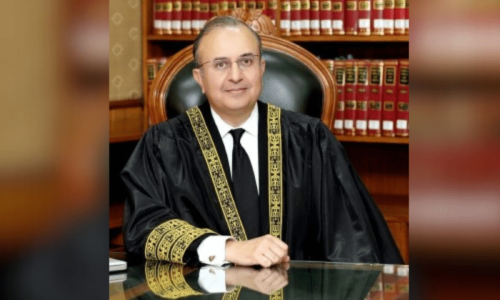
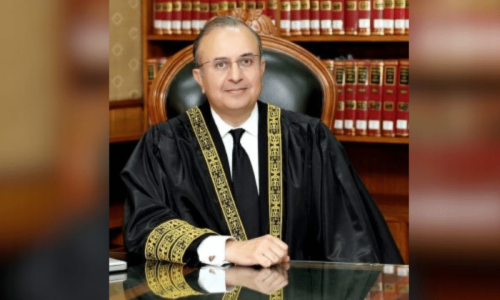
ISLAMABAD: The concentration of administrative powers in the hands of a single individual, such as the chief justice, runs counter to the ideals of democratic governance and judicial fairness, observed Justice Syed Mansoor Ali Shah in a 20-page additional note to the Oct 11 judgement in the Supreme Court (Practice and Procedure Act).
Justice Shah said in the note, released on Thursday: “It is imperative that such powers, including crucial decisions on case allocations, be exercised collectively, harnessing the diverse perspectives and wisdom of all justices.”
Parliament passed the Supreme Court (Practice and Procedure) bill on April 10 last year. It envisaged the formation of a panel of the most senior judges, led by the CJP, to handle all cases and appeals.
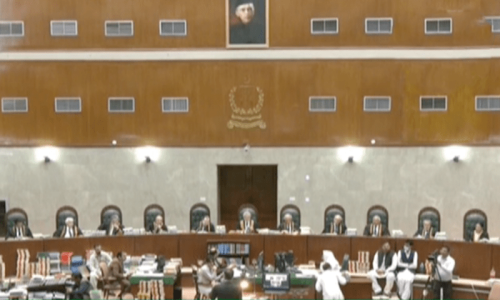
On Oct 11 last year, a 15-judge full court had upheld the law with a caveat that the right to appeal provided against a decision taken under Article 184(3) of the Constitution would not be applicable with retrospective effect.
In additional note to judgement on SC Practice and Procedure Act, judge says benches formed by former CJP should be ‘protected’
Justice Shah explained that in the realm of public institutions, particularly within hallowed halls of the Supreme Court, the principle of collegial working is the cornerstone for ensuring justice, fairness, and the larger good of the people who seek its intervention. “This approach not only democratises the decision-making process but also reinforces the integrity and impartiality of the court.
“It would be hard to overestimate how important civility and collegiality are to the proper functioning of our legal system, and more specifically of our courts,” Justice Shah observed.
“Nothing can be resolved in society without the ability to be civil and collegial. The stakes are high, and our ability to listen carefully, to express our ideas respectfully, and to collaborate for the greater good are more important than ever,” Justice Shah observed.
Constitution of benches
Referring to a question about validity of the constitution of benches by a former CJP and the decision made by such benches during the period in which the Practice and Procedure Act remained suspended, Justice Shah observed that acts done in accordance with the law prevailing at the time were generally protected under the doctrine of past and closed transactions.
The act of constituting benches by the former chief justice should be protected unless some exceptional circumstances justify departure from the principle, Justice Mansoor Ali Shah said.
Published in Dawn, March 8th, 2024