BRUSSELS: The European Union moved a step closer on Tuesday to banning products made from forced labour after negotiators reached an agreement on a law that supporters hope will help block imports from China.
The bloc’s draft text does not specifically mention China, but focuses on all products made from forced labour, including those made within the European Union.
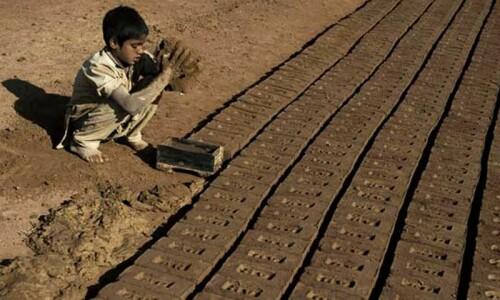
Nearly 28 million people, including 3.3m children, are in forced labour around the world, according to the International Labour Organisation.
Under the new law, the European Commission must open investigations when there is suspicion of forced labour in a company’s supply chains outside the EU.
Meanwhile, the EU’s 27 member states will be expected to launch probes when the forced labour is suspected inside the bloc.
If the use of forced labour is proven, the relevant goods can be seized at the borders and withdrawn from the European market and online marketplaces.
Companies can be fined for any violations. Although the law does not set a minimum or maximum limit, officials said fines should be an amount that acts as a deterrent.
If a company removes forced labour from their supply chains, the banned products can return to the European market.
“The prevalence of forced labour products on our market is becoming ever more apparent, most notably with products made with Uyghur forced labour. This is unacceptable,” said EU lawmaker Maria Manuel Leitao Marques, who spearheaded the text through parliament.
The EU law, first proposed in 2022, will become official after formal adoption by the EU’s 27 member states and parliament.
Published in Dawn, March 6th, 2024